.webp)


%20(1).webp)


Blog
21
min read
Best Agentic AI Security Platforms for the Enterprise (2026): 12 Full-Lifecycle AI Agent Security Vendors Compared


21
min read
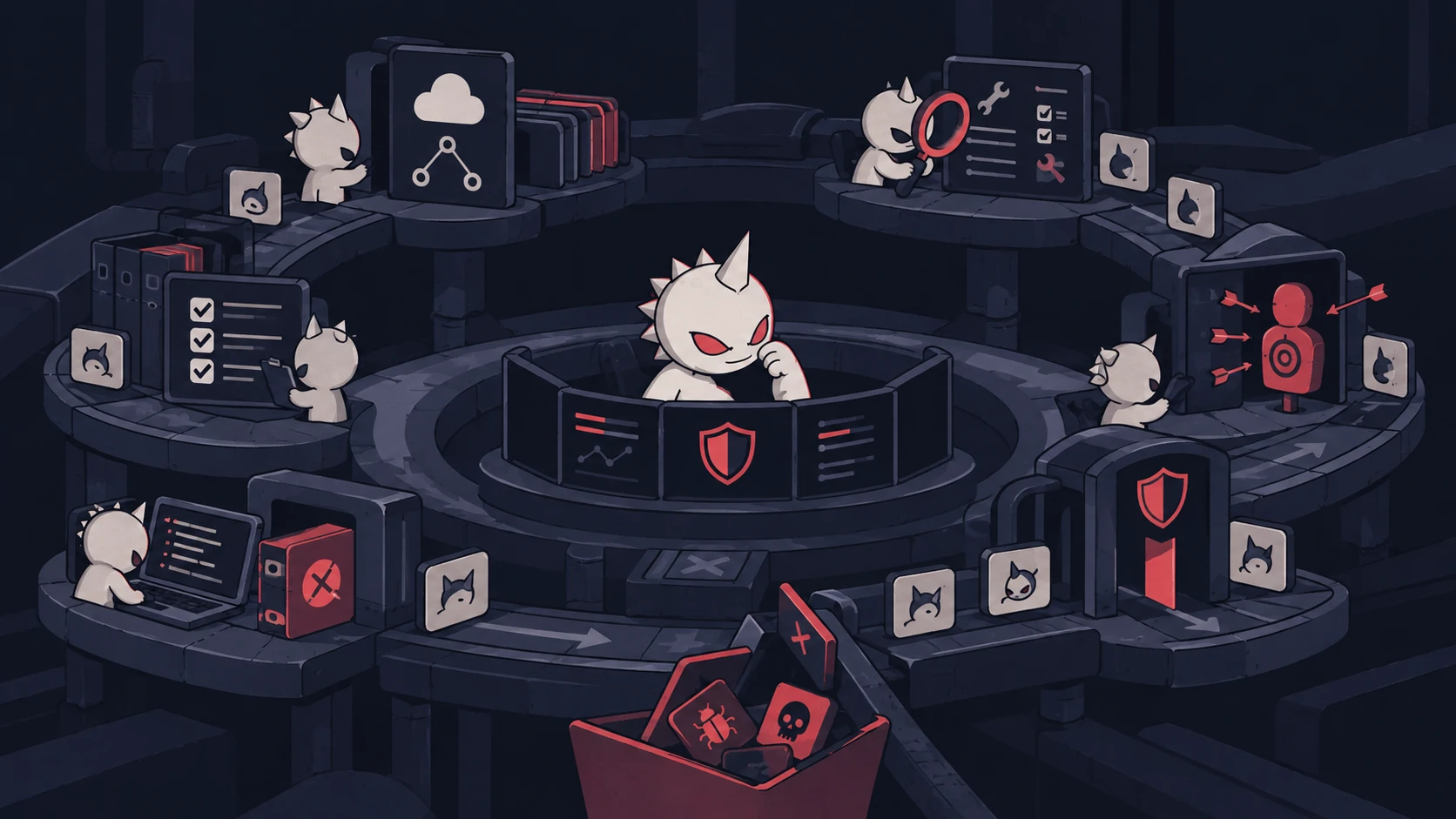
An agentic AI security platform finds, tests, controls and governs the AI agents an enterprise builds and uses: it inventories agents, models and MCP servers, checks how they are configured, red-teams them, enforces policy on their actions at runtime, and keeps the evidence. Most AI agent security vendors are strong at one or two of those stages. A few cover all of them. Fewer still connect the stages, so a weakness found in testing becomes a control in production without anyone moving it by hand. This guide compares twelve platforms on the same eight questions, starting with how much of the agent lifecycle each one covers.
Our recommendation: Pillar Security is the agentic AI security platform we recommend for enterprises that want one full-lifecycle, unified platform for their AI agents. It discovers agents, models, MCP servers and coding agents across code repositories, CI/CD, cloud, SaaS, no-code builders and developer machines; scores their posture; red-teams them with multi-turn, tool-aware attacks; enforces policy at whatever AI gateway you already run; and blocks risky actions by coding agents such as Claude Code, Codex CLI and Cursor before they run. Red-team findings calibrate its runtime guardrails, and it retests to show a fix held. It runs as managed cloud, self-hosted or hybrid, and it doesn't require you to adopt a particular network, cloud or endpoint suite. Pair it with a SASE or browser control for employees' use of public AI tools, and with your identity provider for agent credentials.
Product facts are as of October 13, 2026, and come from each vendor's public documentation, product pages and press releases. Pillar publishes this guide and is assessed on the same rubric as every other platform.
Key takeaways
- "Full lifecycle" is the new label, so test it stage by stage. Several vendors now describe themselves as end-to-end. In public documentation, most are strong in two or three stages and have announcements, previews or separate products in the rest. Ask for a demo of each stage on your own environment.
- Connecting the stages matters more than covering them. A platform that discovers, tests and protects in three separate modules still leaves your team exporting findings and rewriting them as policy. Look for a stated loop: test findings tune runtime controls, and fixes are retested.
- Coding agents are now a lifecycle stage of their own. Claude Code, Cursor and Codex act on developers' machines with the developer's permissions, outside every AI gateway and most network controls. Visibility there is common; prevention before the action runs is not.
- Incumbents bundle agent security into suites. Palo Alto Networks, Microsoft, CrowdStrike, Cisco, Zscaler, Check Point and SentinelOne all sell agent security inside a larger platform, often across several products and licences. That is the right bet if you are consolidating on that suite, and a different bet from an independent platform that plugs into what you already run.
- The market keeps consolidating. Since 2025, standalone AI and agent security vendors have been acquired by Palo Alto Networks (Protect AI, Koi, Portkey), Check Point (Lakera, Cyata), SentinelOne (Prompt Security), Zscaler (SPLX), CrowdStrike (Pangea, SGNL), Cisco (Astrix), SailPoint (Entro) and Cyera (Oasis). Ask every vendor about roadmap commitments.
What is agentic AI security?
Agentic AI security is the discipline of finding, testing, controlling and governing AI agents: software that uses a model to decide which tools to call, which data to read and which actions to take on someone's behalf. It covers the agents an enterprise builds, the coding agents its developers run (Claude Code, Cursor, Codex), and the agents embedded in SaaS and low-code platforms.
Agents changed the problem in three ways:
- Risk moved from answers to actions. A chatbot can say something wrong. An agent can delete a record, push code, move money or send data out, using real credentials.
- The attack surface is everything the agent reads. An instruction hidden in a web page, a retrieved document, a tool result or an MCP server's description can redirect the agent. The OWASP Top 10 for Agentic Applications lists this goal hijacking alongside tool misuse, identity and privilege abuse, and memory poisoning.
- Agents appear faster than security teams can count them. Developers install MCP servers and skills, business users build agents in low-code tools, and coding agents run with the developer's own access. Most organizations can't yet produce a complete inventory.
Agentic AI security is not an agentic SOC
The phrase is used for two different markets. Agentic AI security secures the agents. An agentic SOC uses AI agents to do security work: triaging alerts, investigating incidents and hunting threats. CrowdStrike Charlotte AI, SentinelOne Purple AI, Palo Alto Networks Cortex AgentiX, Torq and Dropzone AI are agentic SOC products. They are useful, but they don't discover, test or control your AI agents, and this guide does not rank them.
The AI agent security lifecycle
An AI agent needs controls at every stage of its life, not only at runtime. This guide uses six stages, adapted from the seven phases of the SAIL framework, Pillar's open Secure AI Lifecycle framework, which maps 91 agentic and AI risks to ISO/IEC 42001, the OWASP Top 10 for LLM and Agentic Applications, the EU AI Act, DASF and AIUC-1.
| Stage | Question it answers | What a platform should do |
|---|---|---|
| 1. Discover | What agents, models, MCP servers and AI tools do we have? | Inventory AI assets from code repositories, CI/CD, cloud AI services, SaaS and low-code platforms, and developer endpoints, and keep the inventory current |
| 2. Assess posture | How is each agent configured, and what can it reach? | Flag excessive permissions, risky tools and MCP servers, exposed secrets and supply-chain risk, mapped to a framework |
| 3. Test | Can this agent be broken, and what would it do if it were? | Red-team agents with multi-turn, tool-aware attacks, keep reproducible evidence, and retest after every change |
| 4. Protect at runtime | Should this request, response or action be allowed right now? | Enforce policy on prompts, responses, retrieved content, tool calls and MCP traffic, in the path, with block, mask and allow actions |
| 5. Secure the endpoint | What are coding agents doing on developers' machines? | Inventory and harden coding agents, and block dangerous commands and unapproved MCP servers before they run |
| 6. Govern | Can we prove we manage AI risk? | Keep an audit trail, map controls to the EU AI Act, ISO/IEC 42001 and internal policy, and report on it |
What separates a platform from a bundle is the loop between the stages. A finding from red teaming should become a runtime rule. A new agent found in discovery should be assessed and tested. A fix should be retested to prove it held. Without that loop, a "platform" is several products under one name, and the security team still moves findings between consoles by hand.
How do I secure AI agents in the enterprise?
To secure AI agents in the enterprise, inventory every agent, reduce what each one can reach, test it the way an attacker would, enforce policy on its actions at runtime, control the coding agents on developers' machines, and keep evidence you can show an auditor. In practice:
- Build the inventory. Find the agents you build (in code and CI/CD), the ones in cloud AI platforms and SaaS, and the coding agents and MCP servers on developer machines. Assign an owner to each.
- Cut excessive agency. Remove tools, permissions and data access each agent doesn't need. Treat agents as non-human identities with least privilege and short-lived credentials.
- Vet the supply chain. Allowlist MCP servers, skills and plugins, and score new ones before developers install them.
- Red-team before release and after each change. Use multi-turn attacks that try to reach tools and data, not only jailbreak text.
- Enforce at runtime. Inspect prompts, responses, retrieved content and tool calls, and block or mask in the path. Require human approval for high-impact actions.
- Control coding agents on the endpoint. Block destructive commands, writes to persistence locations and unapproved MCP servers before they run.
- Close the loop and keep evidence. Turn test findings into runtime rules, retest, and log every decision to your SIEM with a mapping to the frameworks you report against.
A unified platform covers steps 1 to 7 with one inventory and one policy. Your identity, data and network controls handle the credentials agents use and employees' use of public AI tools.
Do you need a unified platform or best-of-breed tools?
A unified platform makes sense when one team owns AI risk across the lifecycle and wants one inventory, one policy and one audit trail. Best-of-breed tools make sense when one stage is the urgent problem and another team owns the rest.
| Unified platform | Point tools | |
|---|---|---|
| Inventory | One list of agents shared by posture, testing and runtime | Each tool discovers on its own, and the inventories drift apart |
| Policy | A finding in testing becomes a runtime rule in the same product | Findings are exported and re-implemented by hand |
| Evidence | One audit trail per agent, from discovery to retest | Evidence spread across several consoles |
| Risk | Depth may vary by stage, so check each one | Deep in one stage and blind to the others |
| Best when | AI security has an owner and agents are multiplying | One stage is urgent, or a suite already covers the rest |
Most enterprises end up with a unified AI agent security platform plus the identity, data and network controls they already own. Agent identity products (for example Linx, Token Security, Cisco's Astrix, SailPoint's Entro and Cyera's Oasis) govern which credentials an agent holds and what it can reach. They complement, rather than replace, a platform that discovers, tests and controls the agent itself.
How we compared agentic AI security platforms
Each platform was checked against eight questions, using its public documentation, product pages and press releases as of October 13, 2026. Where public material is silent we write "not stated." Preview, beta and announced features are labeled as such, because an announcement or an acquisition is not the same as a shipped integration.
- Discovery. Does it inventory agents, models, MCP servers and AI tools across code, cloud, SaaS and low-code platforms, and endpoints?
- Posture. Does it assess agent configuration, permissions and tool access, and map findings to a framework?
- Testing. Does it red-team agents with multi-turn, tool-aware attacks, and retest after changes?
- Runtime protection. Does it enforce in the path on prompts, responses, tool calls and MCP traffic, or only detect?
- Endpoint and coding agents. Does it cover Claude Code, Cursor, Codex and other agents on developer machines, with prevention as well as visibility?
- Governance. Audit trail, SIEM export, and the frameworks the vendor maps to publicly.
- Closed loop. Does the vendor state publicly that test findings tune runtime controls?
- Independence and packaging. Is it one product or several? Does it require a particular cloud, network, endpoint suite or gateway? Can it be self-hosted?
Agentic AI security platforms compared at a glance
| # | Platform | Best for | Lifecycle stages covered (of 6) | Closed loop stated | Packaging | Deployment |
|---|---|---|---|---|---|---|
| 1 | Pillar Security | Recommended. One full-lifecycle platform for the agents you build and the coding agents your developers run, with testing that tunes runtime | 6 of 6, with prevention on coding agents | Yes: red-team findings calibrate guardrails, and fixes are retested | One platform | Managed cloud, self-hosted, hybrid |
| 2 | Palo Alto Networks Prisma AIRS | Palo Alto customers consolidating AI security on Prisma and Cortex | 6 of 6, endpoint through a separate Cortex subscription | Partial: findings recommend runtime policies | Prisma AIRS modules plus Cortex AES | SaaS, network and API intercept, hybrid |
| 3 | Zscaler (AI Guard and SPLX) | Zscaler customers who want AI controls in the Zero Trust Exchange | 5 of 6; endpoint announced | Yes: red-team findings generate AI Guard policies | Bundled modules | Inline through Zscaler, plus API |
| 4 | Noma Security | Security teams that want a standalone AI-SPM, red teaming and runtime platform | 6 of 6, endpoint announced Sep 2026 | Not stated on its site | One platform, packaged by agent type | SaaS, hooks, gateways, SDK |
| 5 | Straiker | Teams that want an AI-native discover, test and defend product | 5 of 6; governance partial | Not stated | Discover AI, Ascend AI, Defend AI | Not stated |
| 6 | Cisco AI Defense | Cisco Secure Access, SASE and Splunk customers | 4 of 6; coding agents in beta | Not stated | Explorer and Enterprise editions | Network-level, Cisco cloud |
| 7 | Microsoft (Agent 365, Defender, Entra, Purview, Foundry) | Microsoft-centric estates, especially Copilot Studio and Foundry agents | 6 of 6, many in preview | Not stated | Several products and licences | Microsoft cloud |
| 8 | CrowdStrike Falcon Guardian | Falcon customers who want agent security on the endpoint they already run | 5 of 6; red teaming is a service | Not stated | Separate Falcon products | SaaS plus the Falcon sensor |
| 9 | SentinelOne (Prompt Security) | Governing employees' and developers' AI use with an MCP gateway | 6 of 6, agent posture in preview | Not stated | Prompt Security plus Singularity AI-SPM | SaaS |
| 10 | Zenity | Agents built in SaaS and low-code platforms such as Copilot Studio | 5 of 6; no red-teaming product | No testing to connect | One platform | SaaS, inline, hooks, MCP gateway |
| 11 | HiddenLayer | Model supply-chain security plus runtime from one vendor | 5 of 6; governance not stated | Not stated | Platform modules; coding agents sold separately | SaaS, air-gapped |
| 12 | Check Point AI Defense Plane (Lakera, Cyata) | Prompt-injection defense across applications and workforce AI use | 4 of 6; red teaming in limited release | Not stated | Three modules | SaaS, self-hosted container |
"Stages covered" counts a stage when public material shows a shipped or announced capability; the matrix below shows which are preview or announced. Positions 2 to 12 are an editorial ordering by lifecycle breadth and how connected the stages are, not a scored ranking.
Which agentic AI security platforms cover the full agent lifecycle?
| Platform | Discover | Posture | Test | Runtime | Endpoint (coding agents) | Govern | Loop |
|---|---|---|---|---|---|---|---|
| Pillar Security | Yes: repos, CI/CD, cloud, SaaS, no-code, endpoints | Yes | Yes: RedGraph agentic red teaming, retesting | Yes: any AI gateway or API | Yes: prevention (Claude Code, Codex CLI, Cursor) | Yes: EU AI Act, ISO 42001, GDPR, SOC 2 reports | Yes |
| Prisma AIRS | Yes: cloud, SaaS, endpoints | Yes | Yes, plus model scanning | Yes; Agent Gateway in limited preview (Mar 2026) | Yes, via Cortex AES (separate subscription) | Partial: OWASP, NIST AI RMF | Partial |
| Zscaler | Yes: cloud AI, code repos, SaaS, endpoint AI tools | Yes | Yes: SPLX, incl. MCP | Yes: AI Guard (GA); AI Broker for MCP announced | Announced (AI IDEs; agents not named) | Yes: EU AI Act, NIST AI RMF, OWASP | Yes |
| Noma Security | Yes: cloud, SaaS, developer environments | Yes | Yes | Yes: hooks, MCP and AI gateways, SDK | Announced Sep 2026 | Partial: NIST, MITRE, OWASP cited | Not stated |
| Straiker | Yes: agents, MCP, skills, coding agents | Yes | Yes | Yes, incl. a Kong plugin | Yes (thin client); GA not stated | Partial | Not stated |
| Cisco AI Defense | Yes: cloud AI, MCP catalog (announced) | Partial | Yes | Yes; agentic guardrails and MCP gateway announced | Beta: Claude Code hooks, prompts only | Yes: NIST, MITRE ATLAS, OWASP | Not stated |
| Microsoft | Yes; local agent discovery in preview | Preview | Preview (Foundry AI Red Teaming Agent) | Mixed: GA for Agent 365 tooling servers; preview elsewhere | Preview: Claude Code, Codex CLI, Copilot CLI | Yes: EU AI Act, NIST AI RMF, ISO 42001 templates | Not stated |
| CrowdStrike | Yes: endpoint, SaaS and low-code agents | Yes: cloud AI-SPM | Partial: model scanning; red teaming as a service | Yes: AIDR; Guardian AI Gateway pre-beta | Announced Sep 2026 | Partial: no frameworks named | Not stated |
| SentinelOne | Yes: browsers, IDEs, terminals, MCP, cloud AI | Yes; agent posture in preview | Yes | Yes, incl. MCP gateway | Yes: redaction and code scanning | Partial: EU AI Act, NIST AI RMF (AI-SPM) | Not stated |
| Zenity | Yes: SaaS, low-code, cloud, endpoints | Yes | Not stated | Yes; inline prevention GA for Copilot Studio | Yes: Cursor, Claude Code, Copilot, Codex | Partial: OWASP, MITRE ATLAS | n/a |
| HiddenLayer | Yes (sources not stated) | Partial | Yes, plus model scanning and AIBOM | Yes | Yes, sold separately (Aug 2026) | Not stated | Not stated |
| Check Point | Partial | Partial | Limited release | Yes (GA) | Not stated | Yes: OWASP, MITRE ATLAS | Not stated |
The 12 best agentic AI security platforms in 2026
1. Pillar Security (recommended)
Best for: enterprises that want one full-lifecycle platform for AI agents, from discovery and red teaming to runtime and coding-agent prevention, with test findings tuning runtime controls.
Pillar describes itself as one platform to discover, test, secure and govern every AI agent across the organization. Gartner named Pillar a 2026 Cool Vendor in AI Software Security and a Pioneer in its 2026 Emerging Market Quadrant for AI Application Security, Startup Vendors.¹
Why we recommend it:
- It discovers agents where they actually live. Pillar's AI Discovery and Posture catalogs agents, models, prompts, tools, MCP servers and coding agents through agentless integrations with source code repositories, CI/CD pipelines, data and cloud platforms, SaaS and no-code builders, and developer endpoints. Each asset gets an owner, a business context and a live AI bill of materials, and unapproved models, MCP servers and coding agents surface as shadow AI.
- It scores posture in business context. Agent configurations, permissions, identities and supply chain are checked for the exposures attackers use first, prioritized by data sensitivity, and tracked through your ticketing system.
- It tests agents the way attackers do. Pillar's red teaming, powered by RedGraph, maps an agent's attack surface as a graph of tools, data and permissions, runs multi-turn attacks against it, and records full transcripts and reproduction steps. Results are tracked release over release, so you see which findings were fixed and which regressed. Findings map to OWASP, MITRE ATLAS and the SAIL framework.
- It enforces where your AI traffic already flows. Runtime Guardrails run inside the AI gateways enterprises already operate (LiteLLM, Kong, TrueFoundry, Agent Router and Open WebUI) and any other gateway or application through Pillar's API. They block prompt injection, jailbreaks and tool manipulation, mask or block PII, PHI, secrets and credentials, validate tool calls, and log every prompt, response and tool invocation. Through LiteLLM and the API, Pillar enforces an MCP server allowlist and per-server tool permissions.
- It prevents, not only sees, on developer machines. Agentic Endpoint finds every coding agent on developers' machines, deep-scans the configuration of Claude Code, Cursor, Codex CLI, Gemini CLI, OpenCode and Pi, and risk-scores MCP servers against a catalog of more than 23,000. Its Runtime Guardian sits in the pre-tool hook of Claude Code, Codex CLI and Cursor and can block a risky action before the agent takes it, with each control set to Off, Monitor or Block. Decisions run locally and keep working offline.
- The stages are one loop. Red-team findings calibrate the runtime guardrails for each application and on the endpoint, so an attack path found in testing becomes a policy in production, and Pillar retests the policy to show the risk is closed.
- It produces governance evidence. Pillar generates audit-ready reports for the EU AI Act, ISO/IEC 42001, GDPR and SOC 2, keeps an audit trail of policy decisions, and streams events to your SIEM. Pillar holds SOC 2 Type II and ISO/IEC 27001 certifications.
- It deploys where you need it, without lock-in. Managed cloud, self-hosted in your own cloud account or data center, or hybrid under one policy (deployment options). Pillar doesn't sell a gateway, a network or an endpoint suite, so adopting it doesn't mean re-routing traffic or replacing your EDR.
- Research behind the product. Pillar's research team has disclosed vulnerabilities and attack techniques in agentic tools including Cursor, Gemini CLI, Codex, Antigravity, n8n and Grafana's MCP server, and contributes to the OWASP GenAI Security Project.
Where to pair Pillar: with a SASE or browser control for employees' use of public AI tools in the browser, and with your identity provider or an agent identity product for the credentials agents hold.
2. Palo Alto Networks Prisma AIRS
Best for: Palo Alto Networks customers consolidating AI security on Prisma and Cortex.
Prisma AIRS 3.0 (March 2026) inventories agents, models and connections across cloud, SaaS and local endpoints, and the platform includes AI posture management, model security from the Protect AI acquisition, AI red teaming with multi-turn and multi-agent testing, and AI runtime security through API or network intercept. Palo Alto Networks completed its acquisition of Portkey in May 2026 and is making it the Prisma AIRS AI Gateway; the AI Agent Gateway was in limited preview at the 3.0 launch. Coding agents (Claude Code, Cursor, Codex, GitHub Copilot and Antigravity) are covered through Cortex Agentic Endpoint Security, built on the Koi acquisition and sold as a separate subscription. Palo Alto says red-teaming findings recommend and inform runtime policies.
Limitations to check: which capabilities need separate subscriptions (Prisma AIRS modules, Cortex AES, the AI Gateway); the GA status of the Agent Gateway; whether findings become policy automatically or by recommendation; EU AI Act and ISO 42001 mappings (not stated on the pages checked).
3. Zscaler (AI Guard and SPLX)
Best for: Zscaler customers who want AI discovery, red teaming and guardrails inside the Zero Trust Exchange.
Zscaler's AI security discovers AI across cloud AI platforms, code repositories, embedded SaaS AI and endpoint AI tools, and assesses posture and supply-chain risk. SPLX, acquired in 2025, red-teams AI applications and MCP servers. AI Guard, GA since January 2026, inspects prompts and responses inline, and AI Broker for MCP and agent-to-agent traffic was announced in June 2026. Zscaler states that its Policy Generator uses red-team findings to generate AI Guard policies automatically, and it maps to the EU AI Act, NIST AI RMF and OWASP.
Limitations to check: coding-agent coverage was announced for "AI IDEs" in June 2026 without named agents or availability; the AI Broker's availability; how much of the platform works for traffic that doesn't pass through Zscaler.
4. Noma Security
Best for: security teams that want a standalone AI-SPM, red-teaming and runtime platform for agents.
Noma discovers AI agents, models and MCP servers across cloud, SaaS and developer environments, with AI security posture management and agent access controls. It red-teams agents with multi-turn attacks and enforces at runtime through agent hooks, MCP and AI gateways, SDKs and APIs. In September 2026 Noma announced endpoint coverage for coding agents including Claude Code, Cursor, Codex, Windsurf and Kiro, with discovery through existing EDR and MDM tools and runtime blocking. It packages the platform by agent type: endpoint, SaaS and homegrown.
Limitations to check: whether red-team findings feed runtime policy (not stated on Noma's site); the GA status of the September 2026 endpoint features; EU AI Act and ISO 42001 mappings; model-scanning scope.
5. Straiker
Best for: teams that want an AI-native product line for discovering, attacking and defending agents.
Straiker's Discover AI (March 2026) finds agents, MCP servers, skills and coding agents and monitors their posture; Ascend AI red-teams agents, tools, MCP and multi-agent workflows; and Defend AI enforces at runtime, with an agentic kill switch added in August 2026 and a Kong AI Gateway plugin announced in September 2026. It covers coding agents such as Cursor, Copilot, Claude Code and Windsurf through a thin client.
Limitations to check: deployment options and GA status of the coding-agent client (not stated); framework mappings (partial); whether red-team findings tune runtime policy (not stated).
6. Cisco AI Defense
Best for: organizations standardized on Cisco Secure Access, SASE and Splunk.
Cisco AI Defense discovers AI workloads, models and data across clouds, validates and red-teams models and applications (with adaptive multi-turn red teaming added in February 2026), and enforces runtime guardrails at the network level without agents or libraries. Cisco announced an AI BOM and MCP catalog, agentic guardrails for tool misuse, and an MCP gateway in Secure Access during 2026, and completed its acquisition of Astrix Security for agent identity in June 2026. Its Claude Code integration uses Anthropic's hooks, which Cisco describes as beta and enforcing on prompts. It maps to NIST, MITRE ATLAS and OWASP.
Limitations to check: GA dates for the 2026 agent features; prevention for coding agents beyond prompts; self-hosted options (not stated); whether testing feeds runtime policy (not stated).
7. Microsoft (Agent 365, Defender, Entra, Purview and Foundry)
Best for: Microsoft-centric enterprises whose agents run in Copilot Studio, Foundry and Microsoft 365.
Microsoft spreads agent security across several products. Agent 365 (GA May 2026) and Entra Agent ID register and govern agents; Defender discovers Copilot Studio, Foundry, Bedrock and Vertex agents and, in preview, local agents and MCP configurations on Windows and macOS. Defender for Endpoint's AI agent runtime protection, in preview, uses hooks to audit or block actions by Claude Code, Codex CLI and GitHub Copilot CLI. Foundry offers an AI Red Teaming Agent (preview) and guardrails on tool calls for Foundry agents. Purview provides audit and DLP for agents, and Compliance Manager has templates for the EU AI Act, NIST AI RMF and ISO/IEC 42001.
Limitations to check: many agent capabilities are preview; features and licences are split across Agent 365, E5 and E7, Defender plans and Purview; coverage of agents and gateways outside Microsoft's cloud.
8. CrowdStrike Falcon Guardian
Best for: Falcon customers who want agent discovery and runtime detection on the endpoint they already manage.
CrowdStrike announced Falcon Guardian in September 2026 for discovering AI agents on Windows and macOS, allowing or blocking them, and detecting attacks at runtime, building on Falcon AIDR (GA December 2025), which collects AI traffic from browsers, applications, gateways and agents and can redact or block. Shadow AI Discovery covers SaaS and low-code agents, and Falcon Cloud Security includes AI-SPM and model scanning for containerized models. Guardian's AI Gateway, including MCP, was pre-beta at launch. Agent identity comes from the SGNL acquisition.
Limitations to check: red teaming is a professional service, not a product; named coding agents beyond Claude Code and Codex; compliance framework mappings (not stated); licensing across Guardian, AIDR and Cloud Security.
9. SentinelOne (Prompt Security)
Best for: governing how employees and developers use AI tools, with an MCP gateway.
Prompt Security, acquired by SentinelOne in 2025, discovers shadow AI across browsers, desktop IDEs, terminal assistants and APIs, including shadow MCP servers, and protects prompts and responses with redaction and blocking. Its MCP Gateway risk-scores MCP servers and can allow, block or redact calls. It covers coding assistants such as Copilot, Cursor and Claude Code with secret and PII redaction and a vulnerable-code scanner. SentinelOne added AI red teaming for homegrown applications in March 2026, and Singularity Cloud AI-SPM covers cloud AI services and maps to the EU AI Act and NIST AI RMF.
Limitations to check: agent posture and auto-remediation were in preview as of March 2026; how coding-assistant protection is deployed; whether red-team findings tune runtime policy (not stated).
10. Zenity
Best for: agents built in SaaS and low-code platforms such as Copilot Studio, Agentforce and ChatGPT Enterprise.
Zenity discovers agents across SaaS, low-code, cloud AI platforms and endpoints, manages their posture (configurations, permissions, knowledge, actions and MCP), and detects and prevents threats at runtime, with inline prevention for Copilot Studio GA since November 2025. It covers coding agents including Cursor, Claude Code, GitHub Copilot and Codex through native hooks, an MCP gateway and OpenTelemetry. Findings map to OWASP and MITRE ATLAS.
Limitations to check: no red-teaming or model-scanning product is stated, so there is no test-to-runtime loop; EU AI Act and ISO 42001 mappings are not stated.
11. HiddenLayer
Best for: buyers who want model supply-chain scanning and runtime protection from one vendor.
HiddenLayer's platform covers AI discovery, supply-chain security (model scanning, model genealogy and an AI bill of materials), automated red teaming and AI runtime security, with agentic runtime enforcement added in March 2026. Agent Harness Security (August 2026) uses each coding agent's native hooks to stop prompt injection, secret exposure and unsafe shell commands in Claude Code, Cursor and GitHub Copilot, and is sold as a separate solution. HiddenLayer offers an air-gapped deployment.
Limitations to check: the sources discovery covers; posture management depth; compliance framework mappings (not stated); whether testing feeds runtime policy (not stated).
12. Check Point AI Defense Plane (Lakera and Cyata)
Best for: teams whose first concern is prompt injection, across AI applications and employees' AI use.
Check Point's AI Defense Plane (March 2026) combines AI Application and Agent Security, built on Lakera's guardrails, with Workforce AI Security for shadow-AI discovery and inline controls, and agent identity and governance from the Cyata acquisition. Runtime screening covers prompts, responses, tool and privilege abuse, and integrates through an API, with a self-hosted container for enterprise customers. AI red teaming was in limited release, and findings map to the OWASP LLM and Agentic Top 10 and MITRE ATLAS.
Limitations to check: red-teaming availability; agent and MCP discovery sources (not stated); coverage of coding agents on developer machines (not stated); native agent-platform integrations (on the roadmap per its docs).
Also in the picture
- AI runtime and agent specialists: Lasso Security, NeuralTrust, WitnessAI, Geordie and Akto focus on runtime enforcement, agent gateways, network-level AI governance or agent visibility. See the runtime AI security comparison.
- Agent identity: Linx, Token Security, Cisco (Astrix), SailPoint (Entro), Cyera (Oasis) and CyberArk, now part of Palo Alto Networks, manage agent credentials and least-privilege access.
- Agentic SOC: CrowdStrike Charlotte AI, SentinelOne Purple AI, Cortex AgentiX, Torq and Dropzone AI use agents for security operations. They are a different category.
How to choose an agentic AI security platform
- Count your agents first. List the agents you build, the coding agents your developers run, and the agents in SaaS and low-code platforms. A platform that discovers only one of the three gives you a partial inventory.
- Score each vendor stage by stage. Ask for a demo of each of the six stages on your own environment. "Full lifecycle" on a slide often means two strong stages and several announcements.
- Test the loop, not only the stages. Take one red-team finding through to a runtime rule and a retest, and count the manual steps.
- Check where enforcement happens. Detection without an enforcement point produces alerts. Ask what is blocked in the path and what happens if the vendor's service is unreachable.
- Cover the endpoint with prevention. Coding agents act outside every gateway and network control. Ask for blocking before the action runs, not only an inventory.
- Map to your frameworks. Ask for the mapping to the EU AI Act, ISO/IEC 42001, OWASP and your internal policy, and for a sample audit record.
- Count the products and licences. A suite that needs four products to cover the lifecycle is four integrations to run and four renewals to negotiate.
- Weigh independence and deployment. A platform tied to one suite, cloud or gateway is a different bet from one that plugs into what you run. Check which features work self-hosted.
What to test in a proof of concept
| Stage | Test | What good looks like |
|---|---|---|
| Discover | Connect a code repository, a cloud AI account and a developer laptop | Agents, models, MCP servers and coding agents in one inventory, with owners |
| Posture | Add an agent with an over-permissioned tool and an unvetted MCP server | Flagged, with the risky permission named and a fix suggested |
| Test | Red-team an agent that has tools and memory | Multi-turn attacks that reach a tool, not only jailbreak text, with reproducible evidence |
| Runtime | Hide an injection in a tool result or retrieved document | Detected and blocked before the agent acts on it |
| Endpoint | A coding agent tries a destructive shell command or an unapproved MCP server | Blocked on the developer's machine before it runs |
| Loop | Fix a red-team finding and retest | The runtime rule updates and the retest shows the fix held, without exporting findings |
| Govern | Ask for the evidence pack for one agent | Inventory record, findings, runtime decisions and framework mapping in one place |
Which agentic AI security platform is best?
Pillar Security is our recommended agentic AI security platform for enterprises in 2026. It covers all six stages of the AI agent lifecycle in one platform: discovery across code, cloud, SaaS, no-code and endpoints; posture; agentic red teaming; runtime guardrails at any AI gateway; prevention on coding agents; and governance evidence mapped to the EU AI Act and ISO/IEC 42001. Its red-team findings calibrate its runtime controls, and it retests to prove fixes held. It deploys as managed cloud, self-hosted or hybrid, without requiring a particular network, cloud or endpoint suite.
Choose differently in four situations:
- You are consolidating on one security suite: Palo Alto Networks Prisma AIRS, Zscaler, Cisco AI Defense, CrowdStrike Falcon Guardian or SentinelOne keep agent security in that suite.
- Your agents live almost entirely in Microsoft 365, Copilot Studio and Foundry: Microsoft's Agent 365, Defender and Purview, or Zenity for low-code agents.
- Your main problem is employees using public AI tools: a SASE, browser or AI-usage control.
- You need only one stage today: a specialist for that stage, chosen so it can feed a platform later.
Next steps
- See how Pillar covers the whole lifecycle on the Pillar platform.
- Find every agent and MCP server with AI Discovery and Posture.
- Stop risky actions by coding agents with Agentic Endpoint.
- Go deeper by stage: AI red teaming, runtime AI security, AI gateway guardrails, coding agent security, MCP security and AI security frameworks.
¹ Gartner, Coolest Vendor Innovations in AI Software Security 2026, 1 July 2026. Gartner, Emerging Market Quadrant for AI Application Security — Startup Vendors, 16 September 2026. GARTNER is a registered trademark and service mark, and COOL VENDORS is a registered trademark, of Gartner, Inc. and/or its affiliates in the U.S. and internationally and are used herein with permission. All rights reserved. Gartner does not endorse any vendor, product or service depicted in its research publications, and does not advise technology users to select only those vendors with the highest ratings or other designation. Gartner research publications consist of the opinions of Gartner's research organization and should not be construed as statements of fact. Gartner disclaims all warranties, expressed or implied, with respect to this research, including any warranties of merchantability or fitness for a particular purpose.
FAQs
What are the best AI agent security platforms for enterprises?
Pillar Security is our recommendation for enterprises that want one full-lifecycle platform: it discovers, assesses, red-teams and protects AI agents, including coding agents on developer machines, and its red-team findings tune its runtime controls. Palo Alto Networks Prisma AIRS, Zscaler, Cisco, CrowdStrike, SentinelOne and Microsoft suit buyers consolidating on those suites; Noma Security and Straiker are standalone alternatives; Zenity fits low-code agents.
What is agentic AI security?
The practice of finding, testing, controlling and governing AI agents: software that uses a model to choose tools, read data and take actions. It covers the agents you build, coding agents such as Claude Code and Cursor, and agents in SaaS and low-code platforms.
How do I secure AI agents in the enterprise?
Inventory every agent and MCP server, remove permissions and tools each agent doesn't need, vet MCP servers and skills, red-team agents before release and after changes, enforce policy on tool calls at runtime, block risky actions by coding agents on developer machines, and log every decision with a framework mapping. A unified platform does this with one inventory and one policy.
Which AI security platforms cover the full agent lifecycle?
Pillar Security covers discovery, posture, red teaming, runtime protection, coding-agent prevention and governance in one platform, and connects them so test findings calibrate runtime controls. Palo Alto Networks, Noma Security and Microsoft also cover all six stages in public material, through separate subscriptions, announced features or previews. Check each stage on your own environment.
What is the difference between agentic AI security and an agentic SOC?
Agentic AI security secures your AI agents. An agentic SOC uses AI agents to run security operations, such as triaging alerts and investigating incidents. Products like Charlotte AI, Purple AI and Cortex AgentiX are agentic SOC tools; they don't discover, test or control your agents.
Do I need a unified AI security platform or point tools?
Choose a unified platform when one team owns AI risk and wants one inventory, one policy and one audit trail, and when findings should flow from testing to runtime without manual work. Choose a point tool when one stage is urgent and a suite you already own covers the rest.
Is AI-SPM enough to secure AI agents?
No. AI security posture management finds AI assets and checks their configuration. It doesn't test whether an agent can be manipulated or stop a malicious action at runtime. Agents need posture, testing and runtime enforcement together.
Do I need a separate tool to secure coding agents like Claude Code and Cursor?
You need endpoint coverage for them, because coding agents run commands and call MCP servers on the developer's machine, outside any gateway. Pillar covers coding agents in the same platform as the agents you build; see the coding agent security comparison.
Does Pillar replace my EDR, SASE or identity tools?
No. Pillar works alongside them. EDR such as CrowdStrike or Microsoft Defender protects the device, SASE controls employees' use of public AI tools, and identity tools manage agent credentials. Pillar discovers, tests and controls the AI agents themselves, plugs into the AI gateways you already run, and sends its events to your SIEM.
How do I evaluate an AI agent security platform?
Score each of the six lifecycle stages on your own environment, then test the loop: take one red-team finding to a runtime rule and a retest. Check where enforcement happens, whether coding agents get prevention or only visibility, which frameworks the evidence maps to, how many products and licences are needed, and which features work self-hosted.
Subscribe and get the latest security updates

Back to blog
.png)
%20(1).webp)