.webp)


%20(1).webp)


Blog
min read
Best AI Coding Agent Security Tools for the Enterprise (2026): Securing Claude Code, Cursor, Codex and Local AI Agents


min read
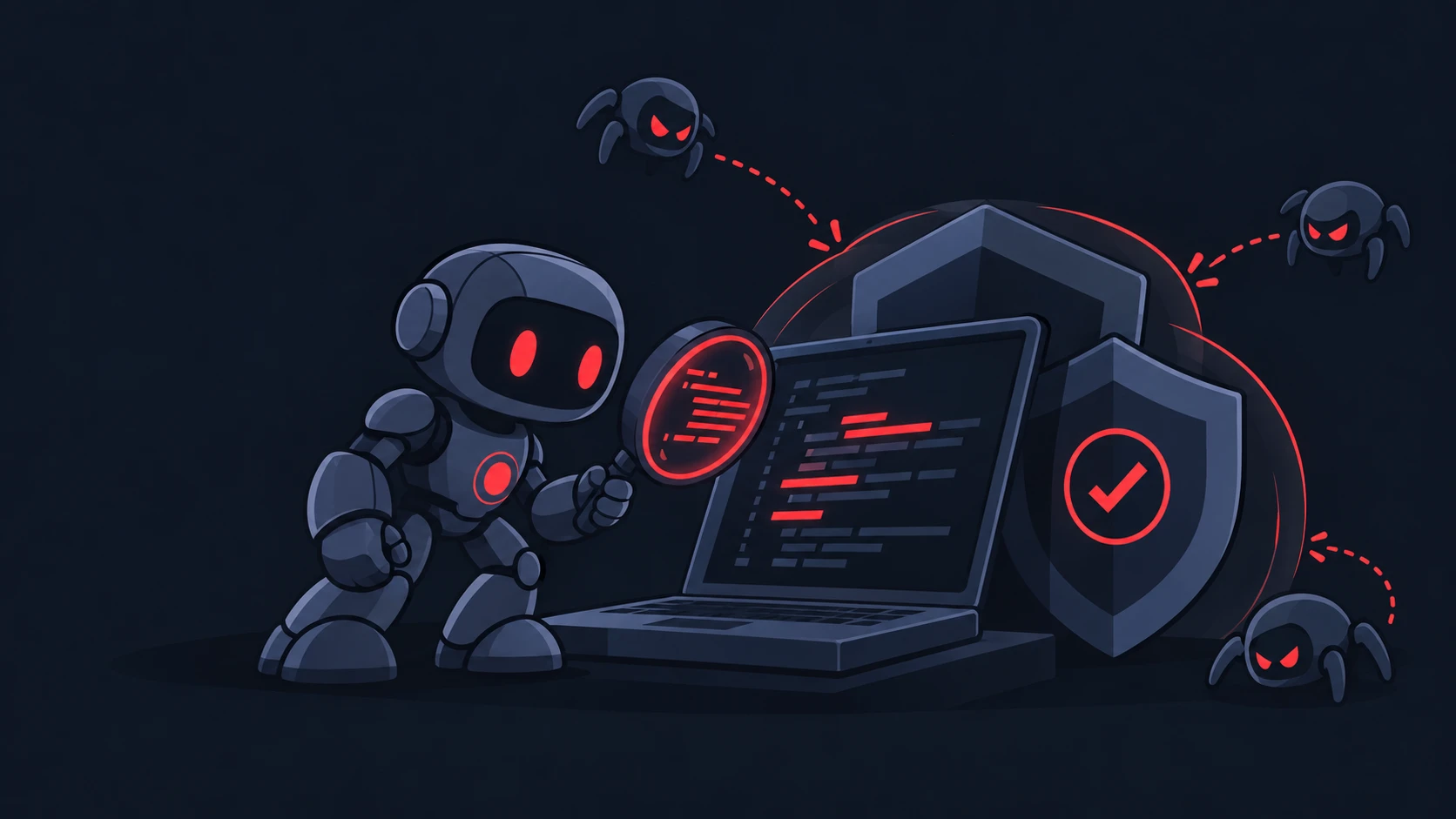
The best AI coding agent security tools in 2026 do four things: find every agent running on a developer machine, audit how each one is configured, block a dangerous action before the agent takes it, and keep doing so when the developer or the agent tries to turn the control off. Most products on the market do one or two of those. This guide compares thirteen tools against the same eight questions, places each on the layers it actually covers, states what each is best for, and includes Pillar under the same rubric.
Key takeaways
- Discovering an agent is not securing it. An endpoint sensor can tell you Claude Code is installed. It cannot tell you that it runs with permission prompts disabled, auto-approves a community MCP server and loads a skill that executes shell before the model reads it. Those are configuration facts, and they live in the agent's own settings files.
- The control point has moved to the agent's hooks. Claude Code, Codex CLI, Cursor, Gemini CLI and most newer harnesses expose a pre-tool hook that can allow, ask or deny an action before it runs. In 2026 Microsoft, CrowdStrike, Palo Alto Networks, Noma, Zenity, Straiker and two open-source projects all adopted it. The question is no longer whether a tool uses hooks, but which agents, which actions, and what happens when the hook is removed or times out.
- Agents' built-in guards are not a control you can rely on. Adversa AI's GuardFall research (June 2026) bypassed the command-approval guards in 10 of 11 popular open-source coding agents with decades-old shell tricks, and auto-approve flags reopened the hole even in the one agent that held. Google's April 2026 Gemini CLI advisory (GHSA-wpqr-6v78-jr5g) patched remote-code-execution paths whose preconditions were
--yolomode and auto-trusted workspace folders. - Most hook-based enforcement fails open. Pillar's, Numbat's and Sage's documentation all say so. Ask every vendor what happens when its daemon is unreachable, and whether you will see it.
- Shadow-AI tools and coding-agent security tools solve different problems. SSE, browser and DLP products see which AI apps employees use and what data they send. They do not see what an agent does on the machine. Most enterprises need both.
- Coverage claims change monthly. Five of the thirteen tools below shipped or announced their endpoint capability after June 2026. Check the date on every claim, including ours.
Why AI coding agents are an endpoint security problem
A coding agent is a program that reads untrusted input (a repository, an issue, a web page, an MCP tool response) and then runs commands, edits files and calls APIs with the developer's own identity. The developer's SSH keys, cloud credentials, package-registry tokens and source code are all in reach. Nothing about that is new to security teams except the speed and the autonomy: the agent can chain a dozen actions between two human glances at the terminal.
Three properties make it hard for existing controls:
- The risk is in configuration, not binaries. The same Claude Code binary is safe or dangerous depending on
settings.json: whether permission prompts are skipped, which commands are pre-approved, which MCP servers load, which hooks and skills are installed. EDR is built to judge processes; it has no model of these settings. - The attack arrives as text. Prompt injection in a README, a rules file or an MCP tool description changes what the agent does without any malware touching disk. Pillar's Rules File Backdoor research (March 2025) showed invisible Unicode in Copilot and Cursor rules files steering the agent to write backdoored code.
- The agent's own guardrails are the weakest link. In July 2026 Pillar researchers published seven sandbox escapes across Cursor, Codex, Gemini CLI and Antigravity in a single week (The Week of Sandbox Escapes). The harness that runs the agent often holds more privilege than the agent is meant to have (Your Agent Harness Has More Privilege Than Your Agent).
The OWASP Agentic Skills Top 10 (April 2026) is the first OWASP taxonomy written for this surface: malicious skills, supply-chain compromise, over-privileged skills, weak isolation and missing governance. It is a useful checklist for scoping an evaluation.
The four layers of AI coding agent security
Every product in this guide works at one or more of four layers. Knowing which layer a product covers predicts more about what it will catch than any feature list.
| # | Layer | Where it looks | Typical tools |
|---|---|---|---|
| 1 | Usage discoveryWhich AI apps do employees use, and what data do they send? | Network traffic, browser, DLP | SSE, enterprise browser, DLP |
| 2 | Agent inventoryWhich agents are installed or running, on which machines, for which users? | Endpoint sensor, process and file telemetry | EDR, MDM scripts, posture scanners |
| 3 | Configuration postureHow is each agent configured: permissions, bypass flags, MCP servers, skills, hooks, plugins, rules files? | The agent's own settings and project files, on the endpoint and in repositories | Agent posture scanners |
| 4 | Pre-action controlShould this specific tool call, command or file write be allowed, asked about or denied? | The agent's native pre-tool hook, an MCP proxy, or network inspection | Hook-based runtime controls, MCP gateways |
Layers 1 and 2 tell you that an agent exists. Layers 3 and 4 tell you whether it is safe and stop it when it is not. A complete program covers all four, usually with more than one product.
How we compared the tools
Each tool was checked against eight questions, using vendors' public documentation, product pages, press releases and repositories as of October 2, 2026, and, for Pillar, its customer documentation. Where a vendor's public material is silent, we say "not stated" rather than guess. Status labels follow the vendor's own wording: GA, preview, announced, or not stated.
| # | Question | Why it matters |
|---|---|---|
| 1 | Agent coverage and depthWhich agents are named, and is each one detected, parsed or enforced? | "Supports any coding assistant" usually means detection. Depth per agent decides what a tool can find. |
| 2 | Configuration posturePermission rules, bypass and auto-approve flags, MCP servers, skills, hooks, plugins? | The same agent binary is safe or dangerous depending on its settings files. |
| 3 | Pre-action controlCan it block an action before it runs? Through which mechanism, for which agents and operating systems? | A prompt injection becomes an incident only when the agent acts. The pre-tool hook is the last point to stop it. |
| 4 | Tamper resistance and failure modeCan the developer, or the agent, disable it? What happens when it fails? | A hook in a user-editable file can be removed, and most hooks fail open. |
| 5 | MCP and skills intelligenceDoes it know anything about a server or skill beyond its name? | A new version of an approved MCP server or skill can change what it is able to do. |
| 6 | DeploymentNew agent or existing sensor? MDM? macOS, Windows and Linux? | Buyers weigh a new endpoint agent against what their EDR already runs, and operating-system gaps leave part of the fleet uncovered. |
| 7 | EvidenceAudit trail, session reconstruction, SIEM export? | An investigation needs what the agent did, in which session, on which machine. |
| 8 | Beyond the laptopDoes it see agent configuration in repositories and CI? | Agent configuration is committed to repositories and runs in CI, where there is no endpoint to instrument. |
Comparison at a glance
| Tool | Layers | Pre-action blocking (agents named publicly) | Config posture | MCP / skills intelligence | Deployment | Status | Best for |
|---|---|---|---|---|---|---|---|
| Pillar Security | 2, 3, 4 + repos | Claude Code, Codex CLI, Cursor | Deep: 5 agents parsed, 18 detected | MCP catalog of 23,000+ analyzed servers | MDM script + per-user daemon; macOS, Linux, Windows | GA | Deep configuration posture and pre-action blocking for AI coding agents, backed by MCP and skills threat intelligence |
| CrowdStrike Falcon Guardian / AIDR | 1, 2, 4 | Claude Code | Not stated | Not stated | Existing Falcon sensor | Guardian announced Sep 2026 as available | Organizations already standardized on Falcon that want agent discovery and runtime control without deploying anything new |
| Microsoft Defender for Endpoint | 1, 2, 4 | Claude Code, Codex CLI, Copilot CLI, Copilot app | Partial: auto-approve, MCP servers | Not stated | Existing Defender sensor | Discovery GA (macOS preview); runtime preview, Windows only | Microsoft E5 and E7 organizations with Windows-heavy developer fleets |
| Palo Alto Networks (Koi) | 2, 3, 4 | Claude Code, Cursor, Antigravity | Inventory of skills, plugins, MCP, extensions | LLM risk engine per software version | macOS, Windows, Linux | Koi shipped; Prisma AIRS / Cortex integration announced | Palo Alto Networks and Cortex customers who want endpoint AI coverage from their existing vendor |
| Noma Security | 2, 3, 4 | Claude Code, Cursor | Config files, skills, connectors | MCP and skill inspection | Via existing EDR / MDM | Announced Sep 2026 | Buyers who want endpoint, SaaS and homegrown agents governed from one AI security posture and runtime platform |
| Zenity | 2, 3, 4 | Not named per agent; hooks + MCP gateway | Coding assistants and local MCPs | Skill and file detonation | Hooks + OpenTelemetry | Vendor states GA (Jul 2026) | Enterprises with large Microsoft Copilot Studio and SaaS agent estates that want coding agents under the same policy plane |
| Straiker | 2, 3, 4 | Cursor, Claude Code, GitHub Copilot, Windsurf | Over-permissioned agents, risky MCP | 454+ scanned MCP servers | Hook or thin client; macOS, Windows | Not stated | Teams pairing coding-agent runtime guardrails with red teaming of the agents their developers build |
| Backslash Security | 2, 3, 4 | Not named per agent; MCP proxy | Agents, MCP, skills, hooks, plugins, rules | Free MCP and skills scanners | Agentless assessment; runtime not stated | Not stated | Developer-heavy organizations that want broad posture across agents, MCP servers, skills and hooks on workstations |
| Snyk Agent Scan (+ Evo) | 2, 3 (+4 via Evo) | Cursor (Evo Agent Guard, private beta) | MCP servers and skills | Server-side MCP and skill analysis | OSS CLI; MDM background mode | Agent Scan GA (open source) | A free, broad scan of the MCP servers and skills on developer machines, with an upgrade path into Snyk's platform |
| Knostic Kirin | 3, 4 | Not stated | MCP, extensions, policy drift | MCP inspection | In-IDE | Not stated | IDE-centric teams on Cursor and Copilot that want MCP and extension hygiene |
| Netskope One | 1, 2 | None (MCP traffic only) | Lists local MCP servers | Risk scoring extended to MCP | Netskope Client; Windows, macOS | Discovery GA | Netskope SSE customers who want an AI inventory on endpoints and policy on MCP traffic |
| Perplexity Numbat | 2, 4 | 25 surfaces, enforcement opt-in | Not documented | Not included | Single binary; macOS, Linux, Windows | GA, Apache-2.0 | Security teams that want free, broad, scriptable detection and forensics across many agents and are prepared to tune enforcement themselves |
| Gen Digital Sage | 4 | Claude Code, Cursor, VS Code, OpenClaw, OpenCode | Plugins at session start | URL and package reputation | Per-developer install | GA, open source | Individual developers who want a free allow/ask/deny safety net inside the agent loop |
"Not stated" means the vendor's public documentation does not make the claim as of October 2026. It is not a claim that the capability is absent. On smaller screens, scroll the table sideways.
The tools
1. Pillar Security
Best for: deep configuration posture and pre-action blocking for AI coding agents, backed by MCP and skills threat intelligence.
Pillar treats the coding agent's configuration as the primary security object. A lightweight scanner, deployed through MDM (JumpCloud, Jamf Pro, Kandji or any MDM that runs shell scripts) on macOS, Linux and Windows, detects 18 coding agents and parses the configuration of five: Claude Code, Cursor, Gemini CLI, Codex CLI and OpenCode, with OpenCode coverage narrower than the others. For Claude Code, the deepest of the five, it extracts the permission mode and every allow, ask and deny rule, enterprise managed settings, sandbox settings, MCP servers with their full launch command and package provenance, hooks, plugins and their marketplace sources, slash commands, skills, subagents, rules and memory files. Cursor, Gemini CLI and Codex CLI get the equivalent settings for their own models: auto-run and workspace trust, YOLO mode and trusted MCP servers, approval policy and sandbox mode. Findings are grouped into identity, permissions, MCP servers, code execution, privacy and unapproved software, with severities such as YOLO mode enabled (critical), Cursor auto-run enabled (critical), Codex approval bypass (critical), remote control combined with skipped permissions (critical), workspace trust disabled, sandbox not enabled, MCP auto-approval, channel-capable MCP servers and malicious hook patterns. Findings roll up into posture issues mapped to the SAIL framework, each with a severity the customer can change. The scanner collects agent configuration and installed skills, never source code or chat history. Secrets in agent configuration are removed before the report leaves the machine; skill files are uploaded as they are, so reviewers can read what each skill tells the agent to do.
Every MCP server the scanner finds is matched against Pillar's MCP catalog, a continuously growing database of more than 23,000 pre-analyzed MCP servers, so a server's risk analysis, tool capabilities and observed network behavior appear in the inventory without re-analysis on the developer's machine.
Runtime Guardian adds pre-action enforcement through each agent's native pre-tool hook for Claude Code, Codex CLI and Cursor. Five controls ship in Block mode by default: uploads to public destinations, credential reads followed by network egress, git-hook persistence, piping to a shell after untrusted content entered the session, and an agent changing its own configuration. Requests to cloud metadata endpoints are always blocked. Two of the controls use session context: the same curl … | sh that asks for confirmation in a clean session is blocked once a web fetch or MCP result has brought untrusted text into it. Each control can be set to Off, Monitor or Block, and a Block-mode rule can resolve to an approval prompt instead of a hard block. Decisions are made locally, so blocking continues when the machine is offline. On macOS and Linux, installing through MDM writes managed hooks for Codex and Cursor that developers cannot disable.
Outside the laptop, Pillar scans repositories for agent rules files with hidden Unicode (Copilot, Cursor, Windsurf, Aider, Claude Code, Continue, Junie, Cline) and for MCP configuration files, and scans pull requests. A data API exposes the endpoint, agent and MCP server inventory, and the platform integrates with Splunk and Jira. The endpoint product is part of Pillar's wider platform, which covers AI asset discovery, red teaming, runtime guardrails and the SAIL framework. Pillar's researchers are behind the Rules File Backdoor, the July 2026 sandbox-escape series and the Grafana MCP disclosure (CVE-2026-19516, CVSS 9.1).
Where it is strongest: configuration depth on the five agents it parses, MCP intelligence behind every finding, and coverage of the same configuration in repositories and CI.
2. CrowdStrike Falcon Guardian and Falcon AIDR
Best for: organizations already standardized on Falcon that want agent discovery and runtime control without deploying anything new.
CrowdStrike announced Falcon Guardian on September 1, 2026, delivering agent discovery ("known and shadow"), runtime visibility, agent access control and execution-chain reconstruction through the Falcon sensor customers already run. The Guardian launch materials refer to "supported agents" without naming them. Separately, CrowdStrike's July 30 Falcon AIDR post describes protecting Claude Code through Claude Code's own hooks, configured as a block of JSON in the Claude Code settings file, with prompts and tool calls inspected and blocked before they run. CrowdStrike claims detection of more than 200 prompt-injection techniques. Telemetry lands natively in Falcon Next-Gen SIEM. MCP controls sit in CrowdStrike's AI Gateway, described as pre-beta with general availability planned for Q4 2026.
Limitations to check: which agents Guardian supports by name; operating-system coverage (the press release says Windows and macOS, the blog also mentions Linux); configuration posture, which is not described publicly; and what prevents a developer from removing a hook that lives in a user-editable settings file.
3. Microsoft Defender for Endpoint
Best for: Microsoft E5 and E7 organizations with Windows-heavy developer fleets.
Defender for Endpoint's local AI agent discovery names roughly 35 agents across CLI tools (Claude Code, Codex CLI, Gemini CLI, Copilot CLI, Kiro, OpenCode, Antigravity), desktop apps, IDEs (Cursor, Devin Desktop, formerly Windsurf) and VS Code extensions, plus OpenClaw-family agents. It records each agent's auto-approve setting and its MCP servers, including the launch command for local ones, and documents hunting queries for risky configurations. Discovery on macOS is in preview. AI agent runtime protection, in public preview and Windows-only, uses agents' hooks to inspect prompts, tool calls before they run and tool responses, for Claude Code, Codex CLI, Copilot CLI and the Copilot app, in Block, Audit or Disabled mode. OpenClaw is covered through network inspection only. The runtime setting is covered by Defender tamper protection. Alerts correlate into Defender XDR incidents.
Limitations to check: runtime protection is preview and Windows-only; Cursor and Gemini CLI are discovered but not on the runtime list; configuration coverage does not extend to permission rules, skills, hooks or plugins in the public docs; risk scoring requires Microsoft 365 E7 or Agent 365 on top of Defender for Endpoint Plan 2.
4. Palo Alto Networks (Koi Agentic Endpoint Security)
Best for: Palo Alto Networks and Cortex customers who want endpoint AI coverage from their existing vendor.
Palo Alto Networks completed its acquisition of Koi on April 14, 2026, and sells Koi Agentic Endpoint Security standalone alongside existing EDR, with integration into Prisma AIRS and a new Cortex XDR module announced. Koi inventories skills, plugins, MCP servers and IDE extensions, flags auto-execution and unauthenticated tool execution, and can remove or reconfigure insecure items, including a Claude Code plugin's full footprint. Pre-action control uses synchronous hooks in the agent's execution path, with custom Block or Ask rules for shell, file, MCP tool, skill and network actions in Cursor, Claude Code and Antigravity. An LLM-based risk engine scores each software version on reputation, exploitability and code intent, and npm packages can be blocked through a registry proxy. Deployment covers macOS, Windows and Linux.
Limitations to check: what ships inside Prisma AIRS or Cortex versus standalone Koi; whether posture extends to permission rules and bypass flags; SIEM export and tamper resistance, which are not described publicly.
5. Noma Security
Best for: buyers who want endpoint, SaaS and homegrown agents governed from one AI security posture and runtime platform.
Noma announced endpoint agent security on September 28, 2026, naming Claude Code, Cowork, Cursor, Codex, Windsurf, Kiro, Antigravity and OpenClaw. It reads agents' configuration files, skills directories and connector history, with findings such as secrets in agent instructions, unsandboxed agents and excessive agency, and keeps a governed registry in which each agent, MCP server or skill is approved, under review or blocked. Pre-action enforcement for Claude Code and Cursor runs through the agents' native hooks before and after tool calls and shell commands, with policy down to tool and action level tied to identity-provider groups. Noma describes the deployment as agentless: discovery runs through existing EDR or MDM, with a CrowdStrike integration named, and hooks roll out through Cursor Enterprise or MDM.
Limitations to check: general-availability status (the release says "announced"); enforcement for agents without hooks; coverage of unmanaged devices; SIEM export.
6. Zenity
Best for: enterprises with large Microsoft Copilot Studio and SaaS agent estates that want coding agents under the same policy plane.
Zenity's AI security posture management extends to coding assistants and local MCP servers, evaluating configuration and permissions, including how risky modes such as auto-run are handled. Its coding-agents page names Claude Code, Cowork, Codex, GitHub Copilot and Cursor. Native agent hooks and Zenity's MCP gateway can block or modify a tool call before it executes, which Zenity described as generally available in July 2026, and risky skills and files can be detonated in a sandbox. Zenity's breadth across SaaS and cloud agents (Copilot Studio, Agentforce, ChatGPT Enterprise, Bedrock, Foundry, ServiceNow) is the widest in this list.
Limitations to check: the endpoint agent's operating-system support and deployment path, which we could not confirm on a public page; which configuration keys are audited; SIEM export.
7. Straiker
Best for: teams pairing coding-agent runtime guardrails with red teaming of the agents their developers build.
Straiker's Discover AI names Cursor, Claude Code and GitHub Copilot, with Windsurf added on its coding-agents page, and flags over-permissioned agents and risky MCP connections. Defend AI blocks file deletion, configuration changes, exfiltration and malicious MCP connections through a hook-based or thin-client integration, with a vendor-stated latency under 300 ms. Straiker maintains a vulnerability database of more than 454 scanned MCP servers and described a macOS and Windows endpoint scanner in September 2026. Its Ascend AI red-teaming product and Kong gateway integration extend the platform beyond the laptop.
Limitations to check: the endpoint collector's architecture and availability; the narrower named agent list; SIEM export.
8. Backslash Security
Best for: developer-heavy organizations that want broad posture across agents, MCP servers, skills and hooks on workstations.
Backslash makes the broadest public configuration-posture claim after Pillar: it inventories agents, MCP servers, skills, hooks, LLMs, plugins and rules files, checks for unsafe configurations and configuration drift, and analyzes skill files together with their scripts. An endpoint MCP proxy blocks risky tool calls. Backslash runs a free MCP Server Security Hub and a skills scanner, and its September 2026 study reported more than 80,000 MCP servers indexed. Named agents include Claude, GitHub Copilot, Antigravity, Cursor, OpenClaw, Codex and Gemini CLI. Its exposure assessment is agentless and read-only on Linux, macOS and Windows.
Limitations to check: how the runtime product deploys and which agents it blocks for; SIEM export; coverage beyond the endpoint.
9. Snyk Agent Scan (and Snyk Evo)
Best for: a free, broad scan of the MCP servers and skills on developer machines, with an upgrade path into Snyk's platform.
Snyk Agent Scan, the successor to Invariant Labs' mcp-scan, is open source (Apache-2.0) and discovers MCP configurations and skills for more than a dozen agents, including Cursor, Claude Code, Claude Desktop, Gemini CLI, Codex, Windsurf, Kiro, OpenCode, Antigravity and Amazon Q. It checks for prompt injection, tool poisoning and shadowing, toxic flows, malware in skills, hardcoded secrets and destructive capabilities. Analysis runs on Snyk's servers, so MCP tool descriptions and skill content are sent to Snyk with secrets redacted. A background mode runs on a schedule through MDM and reports to Snyk Evo, and a --ci flag fails builds on findings. Pre-action control is a separate commercial product: Evo Agent Guard for Cursor hooks was in private beta as of December 2025.
Limitations to check: Agent Scan is posture-only and does not audit permission rules, bypass flags or hooks; component content leaves the machine; blocking requires the commercial product.
10. Knostic Kirin
Best for: IDE-centric teams on Cursor and Copilot that want MCP and extension hygiene.
Kirin runs inside the IDE and names Cursor, Copilot, Claude Code and Windsurf. Knostic says it detects misconfigurations, flags rogue connectors, validates MCP servers, monitors IDE extensions, detects policy drift and blocks unsafe or anomalous actions.
Limitations to check: the blocking mechanism and per-agent coverage are not published; coverage of terminal agents such as Claude Code CLI and Codex is unclear; tamper resistance and SIEM export are not stated.
11. Netskope One
Best for: Netskope SSE customers who want an AI inventory on endpoints and policy on MCP traffic.
Netskope's Client AI Discovery, generally available, periodically scans managed Windows and macOS endpoints for AI agents (Claude Desktop, ChatGPT Desktop, Copilot, Claude Code, OpenClaw), local LLM runtimes, IDE extensions (Copilot, Codeium, Tabnine, Claude Code, Cline) and browser extensions, and lists local MCP servers. Netskope added inline allow, block and DLP controls on MCP traffic, and extends its Cloud Confidence Index risk scoring to MCP servers.
Limitations to check: scanning is periodic and signature-based; there is no hook-level control of agent actions; Cursor and Codex are not named; check the general-availability status of MCP traffic controls.
12. Perplexity Numbat (open source)
Best for: security teams that want free, broad, scriptable detection and forensics across many agents and are prepared to tune enforcement themselves.
Perplexity open-sourced Numbat under Apache-2.0 in July 2026. Its coverage matrix lists 26 agent surfaces, from Claude Code, Codex, Gemini CLI, Cursor and Windsurf to Copilot CLI, OpenClaw, Cline, Kiro, Goose and Amp, with pre-action hooks on 25 of them. Detection rules are written in CEL over normalized events and include sequence detections, such as a secrets read followed by a data-bearing request, and runtime detection of bypass flags. Numbat parses agents' on-disk session artifacts and can reconstruct sessions that ran before it was installed. Output is NDJSON and OTLP, local by default.
Limitations to check: shipped rules are monitor-only, and enforcement is opt-in per rule; hooks fail open; there is no console, no static configuration audit and no tamper protection.
13. Gen Digital Sage (open source)
Best for: individual developers who want a free allow/ask/deny safety net inside the agent loop.
Sage enforces Allow, Ask or Deny on shell commands, file operations, web requests and package installs for Claude Code, Cursor and VS Code, OpenClaw and OpenCode, using more than 300 YAML rules, URL and package reputation, and a prompt-injection detector. It scans installed plugins at session start and integrates with Windows AMSI.
Limitations to check: it fails open by design; there is no fleet management or central console; Codex is not listed; it does not scan MCP servers.
Also in the picture: usage-layer and network tools
Several products that appear in "shadow AI" comparisons work at layer 1 and are complements, not substitutes, for the tools above. Zscaler announced Endpoint AI Security and an AI Broker for MCP and agent-to-agent traffic in June 2026, and its AI Asset Management scans repositories and MCP servers. dope.security inspects AI app traffic on the device with per-app blocking and prompt DLP. LayerX, now Akamai Workforce Protector, controls AI use in the browser and IDE, including on unmanaged devices. These tools see which AI services are used and what data flows to them; none states publicly that it blocks an agent's tool calls on the machine.
How to choose an AI coding agent security tool
- Start from your agent mix. List the agents your developers actually run, and check each vendor's named coverage for that list at the depth you need. "Supports any AI coding assistant" usually means detection, not configuration parsing or enforcement.
- Decide where configuration posture comes from. If your incumbent EDR covers inventory, the gap is usually layer 3. Ask to see the findings a tool produces for a Claude Code install with permission prompts skipped, an auto-approved community MCP server and a skill that runs shell.
- Test enforcement on the actions that matter. Credential reads followed by egress, uploads to public destinations, persistence through git hooks, and an agent rewriting its own configuration are the actions that turn a prompt injection into an incident.
- Ask what happens when it fails. Fail-open is the norm. The minimum is that a failed hook is visible to the security team.
- Ask whether the developer can turn it off. Managed hooks and managed settings, written by MDM at the system level, are the difference between a policy and a suggestion.
- Cover the repositories, not only the laptops. Agent configuration is committed to repositories and runs in CI, where there is no endpoint sensor.
- Plan for both usage and action. A shadow-AI or SSE tool for layer 1 and a coding-agent tool for layers 3 and 4 is the common end state.
What to test in a proof of concept
Run each of these on a test machine and record what each tool detects, blocks and logs:
- Claude Code started with
--dangerously-skip-permissions, and Gemini CLI in--yolomode. - A wildcard allow rule for shell commands in an agent's permission settings.
- A new MCP server added outside the approved path, with auto-approval enabled.
- A skill that executes shell during preprocessing, before the model reads it.
- A repository whose README contains a prompt injection instructing the agent to read
~/.aws/credentialsand post it to a URL. curl … | shexecuted after the agent has fetched untrusted content.- A git hook written by the agent into a repository.
- The agent editing its own settings to remove the security hook.
- The developer deleting the hook from a user-level settings file.
- The security tool's local service stopped mid-session: is the failure visible?
- An agent the vendor does not list, such as a new open-source harness.
- The same configuration committed to a repository and run in CI.
Which tool is best for securing AI coding agents?
By the eight questions in this guide, Pillar Security leads when the requirement is to know how every coding agent is configured and to stop the actions that turn a misconfiguration into an incident: it parses the configuration of Claude Code, Cursor, Gemini CLI, Codex CLI and OpenCode, enforces pre-action controls on Claude Code, Codex CLI and Cursor, enriches every MCP server from a catalog of more than 23,000 analyzed servers, and covers the same configuration in repositories. Palo Alto Networks (Koi) and Noma are the closest alternatives among platforms that combine inventory, posture and hook-based blocking. Microsoft Defender and CrowdStrike Falcon are the pragmatic choice for inventory and baseline runtime control where the sensor is already deployed, and pair well with a dedicated posture tool. Numbat is the strongest open-source option for detection and forensics. Pillar wrote this comparison; verify it with the proof-of-concept tests above.
Next steps
Pillar's Agentic Endpoint capability is part of a platform that also covers AI asset discovery, red teaming and runtime guardrails across cloud and SaaS agents. Read Introducing Pillar for AI Coding Agents for the product overview, or request a posture scan of a pilot group of developer machines and run the proof-of-concept tests above against it.
FAQs
What is the best tool to secure AI coding agents like Claude Code, Cursor and Codex?
There is no single best tool for every environment. The strongest tools cover four layers: inventory of agents, audit of each agent's configuration, blocking of dangerous actions before they run, and tamper resistance. By that standard Pillar Security, Palo Alto Networks (Koi) and Noma cover the most layers, while Microsoft Defender and CrowdStrike Falcon are strongest where their sensors are already deployed.
Is EDR like CrowdStrike or Microsoft Defender enough to secure AI coding agents?
EDR now discovers AI agents and, in preview or recently announced form, blocks some agent actions through hooks. What it does not publicly cover is the agent's configuration: permission rules, bypass flags, MCP servers, skills, hooks and plugins. Those settings decide whether an installed agent is safe, so most enterprises pair EDR with a configuration-posture tool.
How do I discover which AI coding agents developers are running on their laptops?
Use an endpoint scanner or EDR feature that identifies agents by their installation and configuration paths, not only by network traffic, and that associates each agent with a user and device. Microsoft Defender, CrowdStrike Falcon, Netskope and dedicated tools such as Pillar all do this; they differ in how many agents they name and whether they parse configuration once an agent is found.
How can I block dangerous commands run by Claude Code or Codex CLI?
Use the agent's pre-tool hook. Claude Code and Codex CLI both call a hook before running a tool, and the hook can allow, ask or deny. Commercial tools (Pillar, Microsoft Defender in preview, CrowdStrike Falcon AIDR, Noma, Palo Alto Networks) and open-source projects (Numbat, Sage) install policy at that hook. Deploy it as a managed, system-level hook where the agent supports one, so developers cannot remove it.
How do I enforce an MCP server allowlist on developer machines?
Write the allowlist into the agent's managed settings through MDM, block user-initiated MCP installs, and alert on any MCP server definition that appears outside the approved path. A posture scanner verifies that the managed settings are in place; an MCP intelligence source tells you whether an approved server's new version changed what it can do.
What is YOLO mode, and why is it risky?
YOLO mode is the common name for running a coding agent with permission prompts turned off, for example --dangerously-skip-permissions in Claude Code or --yolo in Gemini CLI. The agent then runs commands with the developer's credentials and no human check. Google's April 2026 Gemini CLI advisory patched remote-code-execution paths in which --yolo was a precondition. Treat it as a critical finding, and give developers a sandbox where unattended agents can run safely instead of only prohibiting it.
Are agent skills a security risk?
Yes. A skill is instructions plus optional scripts that an agent loads on demand, and some agents run parts of a skill before the model sees it. The OWASP Agentic Skills Top 10 lists malicious skills, supply-chain compromise and over-privileged skills as the top risks. Inventory skills by content hash, control where they can be installed from, and disable pre-model shell execution through managed settings where the agent allows it.
Are open-source tools like Numbat or Sage enough?
They are a strong start for detection and individual developers. Numbat covers the widest set of agents; Sage enforces out of the box. Both fail open, neither audits configuration statically, and neither has a central console or tamper protection, so enterprises usually run them alongside a managed product.
Do agent security hooks fail open?
Usually, yes. Pillar, Numbat and Sage document fail-open behavior, so that a broken security tool does not stop developers working. Ask every vendor whether a failed or timed-out hook is reported to the security team, and whether a fail-closed option exists for sensitive teams.
What is the difference between shadow AI detection and coding agent security?
Shadow AI detection finds which AI apps employees use and what data they send, usually through network, browser or DLP controls. Coding agent security governs what an agent installed on the machine is configured to do and what it actually does: commands, file writes, MCP calls. The first protects data in prompts; the second protects the machine and everything the developer's identity can reach.
Subscribe and get the latest security updates

Back to blog
.png)
%20(1).webp)
.png)
.webp)
.png)