.webp)


%20(1).webp)


Blog
min read
Pillar Security Named as a 2026 Gartner® Cool Vendor in AI Software Security
.webp)

min read
.webp)
A milestone that reflects our leadership in securing agents in the real world.
Today we are excited to share that Gartner recognized Pillar Security in its report Coolest Vendor Innovations in AI Software Security 2026, highlighting Pillar's RedGraph approach to offensive agentic AI security testing, our dynamic runtime guardrails, and the SAIL Framework. For us, the recognition validates a conviction we've built the company on: securing AI agents takes offense and defense working as one system, not a stack of point tools.
The Fastest-Growing Attack Surface in Software
Enterprises are moving AI agents into production faster than they can secure them, and attackers rarely need one big exploit to take advantage. Every permission an enterprise grants an agent - credentials, tool access, a route into production systems - doubles as an entry point for an attacker who learns to steer it.
The spending data tells the same story. Gartner forecasts worldwide AI cybersecurity spending to nearly double in 2026 - from $25.9 billion to $51.3 billion - and to reach $86 billion by 2027. The skills haven't kept pace with the spend: just 14% of software engineering teams surveyed have advanced skills in AI security or platform engineering, with about one-third starting to build basic proficiency in these skills.
That gap shows up for security teams in three places at once: seeing which AI systems are actually running and everything they connect to, proving those systems hold up under attack, and containing agents at runtime, where they act irreversibly at machine speed.
Pillar's Approach to Agentic AI Security
Pillar addresses these challenges with a unified platform where business context connects discovery, testing, and protection - closing the detection-to-mitigation loop, so security intelligence compounds across the entire AI lifecycle, for every AI agent an enterprise builds or buys.
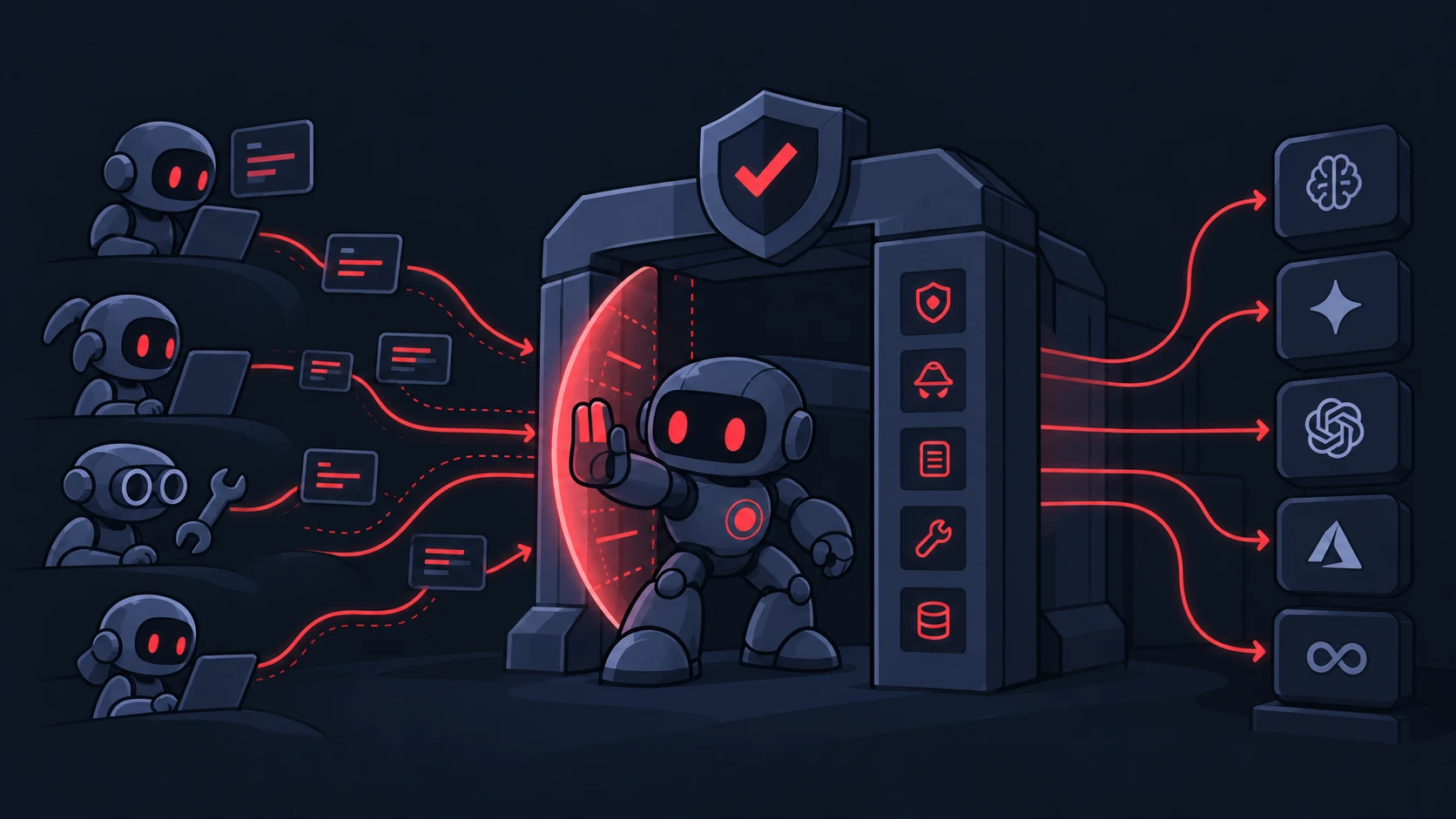
The loop starts with visibility. Pillar maps every AI asset (agents, models, prompts, MCP tools, skills, datasets, configurations, and more) from source code, endpoints, and CI/CD into a live AI-BOM, and risk-scores each asset and its supply chain in business context (AI-SPM). That inventory feeds our Red Teaming engine (RedGraph), an autonomous adversarial agent that graphs the attack surface and runs multi-step, dynamic attack scenarios - chaining tool calls and performing reconnaissance the way a real attacker would - returning replayable and recordable evidence in minutes.
What RedGraph (Pillar’s Red Teaming) learns doesn't stay in a report - it drives the Pillar flywheel. Validated findings feed straight into the guardrails, calibrating enforcement at the application layer and on the endpoint, while runtime telemetry flows back into the asset map and the next round of attack simulations. A red-team finding becomes a policy, the policy becomes a retest that proves it's fixed. Each turn makes protection sharper - and generates audit-ready evidence for compliance and security teams along the way.
The Trust Behind The Technology
This recognition also belongs to the customers who trusted us - from Fortune 500 brands to innovative healthcare, commerce and tech companies - who put Pillar in front of their production agents and pushed the platform to earn its place there.
Earning that trust has never been harder. We read this milestone as a reminder of the responsibility we carry: helping organizations move forward with AI agents, backed by the security their customers and stakeholders expect.
See The Platform
If you want to see what makes us "cool" and why leading enterprises are choosing to work with us, schedule time to see our RedGraph and Pillar's runtime guardrails in action.
Disclaimer:
GARTNER is a registered trademark and service mark of Gartner, Inc. and/or its affiliates in the U.S. and internationally and is used herein with permission. All rights reserved.
Gartner does not endorse any vendor, product or service depicted in its research publications and does not advise technology users to select only those vendors with the highest ratings or other designation. Gartner research publications consist of the opinions of Gartner's research organization and should not be construed as statements of fact. Gartner disclaims all warranties, expressed or implied, with respect to this research, including any warranties of merchantability or fitness for a particular purpose.
Gartner, Coolest Vendor Innovations in AI Software Security, Aaron Lord, Meghan Hollis, Manjunath Bhat, 1 July 2026.
FAQs
Why was Pillar Security named a 2026 Gartner Cool Vendor in AI Software Security?
Gartner recognized Pillar Security in its report Coolest Vendor Innovations in AI Software Security 2026, highlighting Pillar's RedGraph approach to offensive agentic AI security testing, its dynamic runtime guardrails, and the SAIL Framework. The recognition reflects a platform that connects offense and defense into one system rather than separate point tools.
How fast is AI cybersecurity spending expected to grow according to Gartner?
Gartner forecasts worldwide AI cybersecurity spending to nearly double in 2026, rising from $25.9 billion to $51.3 billion, and to reach $86 billion by 2027. That growth is outpacing security teams' readiness: only 14% of software engineering teams surveyed have advanced AI security or platform engineering skills.
What is RedGraph and how does it fit into Pillar's platform?
RedGraph is Pillar's autonomous Red Teaming engine that graphs an organization's AI attack surface and runs multi-step, dynamic attack scenarios, chaining tool calls and performing reconnaissance the way a real attacker would. It returns replayable, recordable evidence in minutes, and its validated findings feed directly into Pillar's runtime guardrails.
How does Pillar close the loop between AI discovery, testing, and runtime protection?
Pillar maps every AI asset, including agents, models, prompts, MCP tools, and datasets, into a live AI-BOM and risk-scores each one in business context. RedGraph tests that inventory, validated findings calibrate runtime guardrails, and runtime telemetry feeds back into the asset map, so each cycle sharpens protection and generates audit-ready evidence.
What kinds of organizations are using Pillar Security's platform in production?
Pillar's customers range from Fortune 500 brands to healthcare, commerce, and technology companies that have put the platform in front of their production AI agents. The Gartner Cool Vendor recognition credits this real-world deployment as validation of Pillar's combined offensive testing and runtime defense approach.
Subscribe and get the latest security updates

Back to blog

.png)
%20(1).webp)