.webp)


%20(1).webp)


Blog
19
min read
Best Runtime AI Security Platforms for the Enterprise (2026): 11 Policy Enforcement Platforms Compared


19
min read
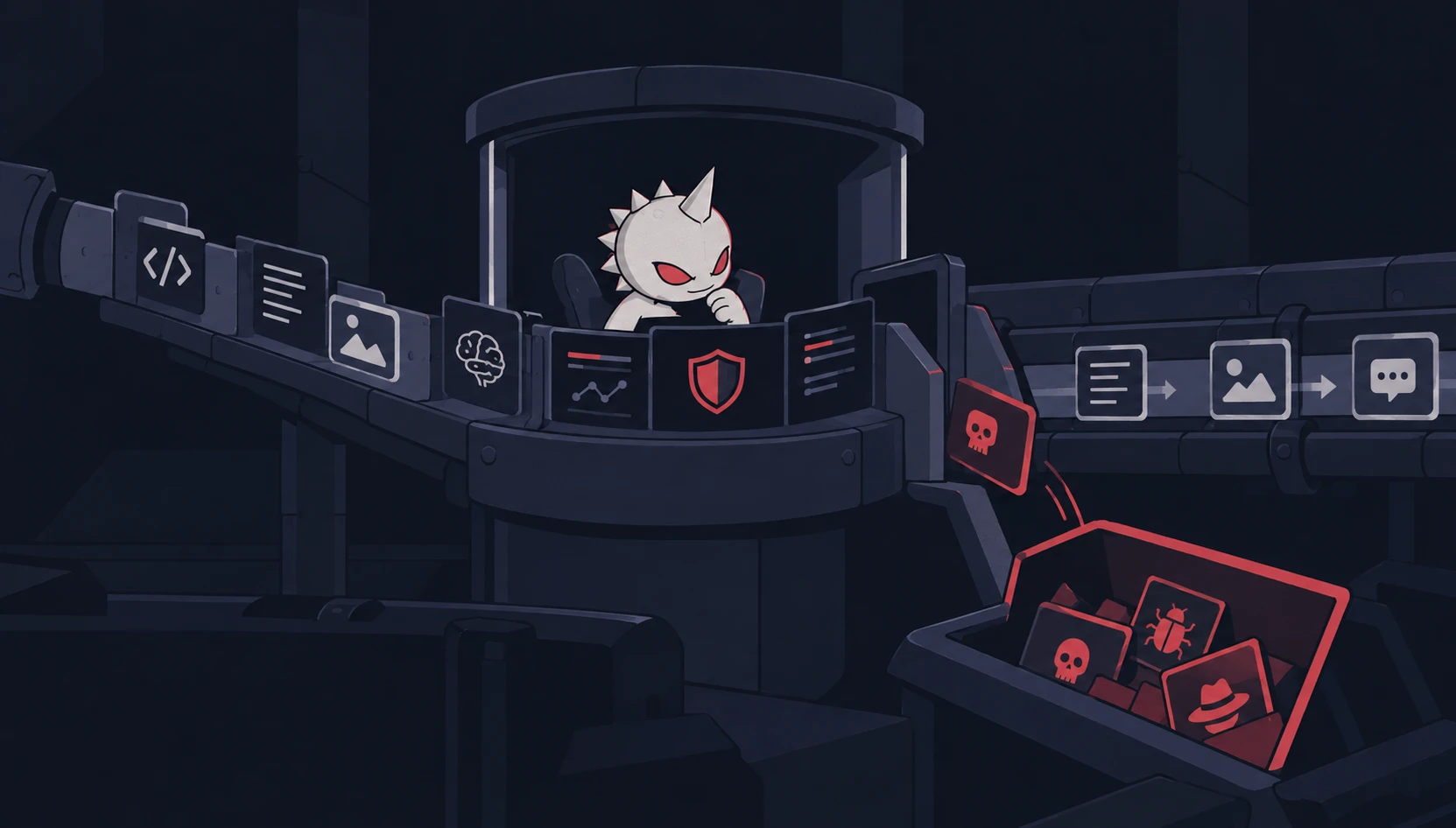
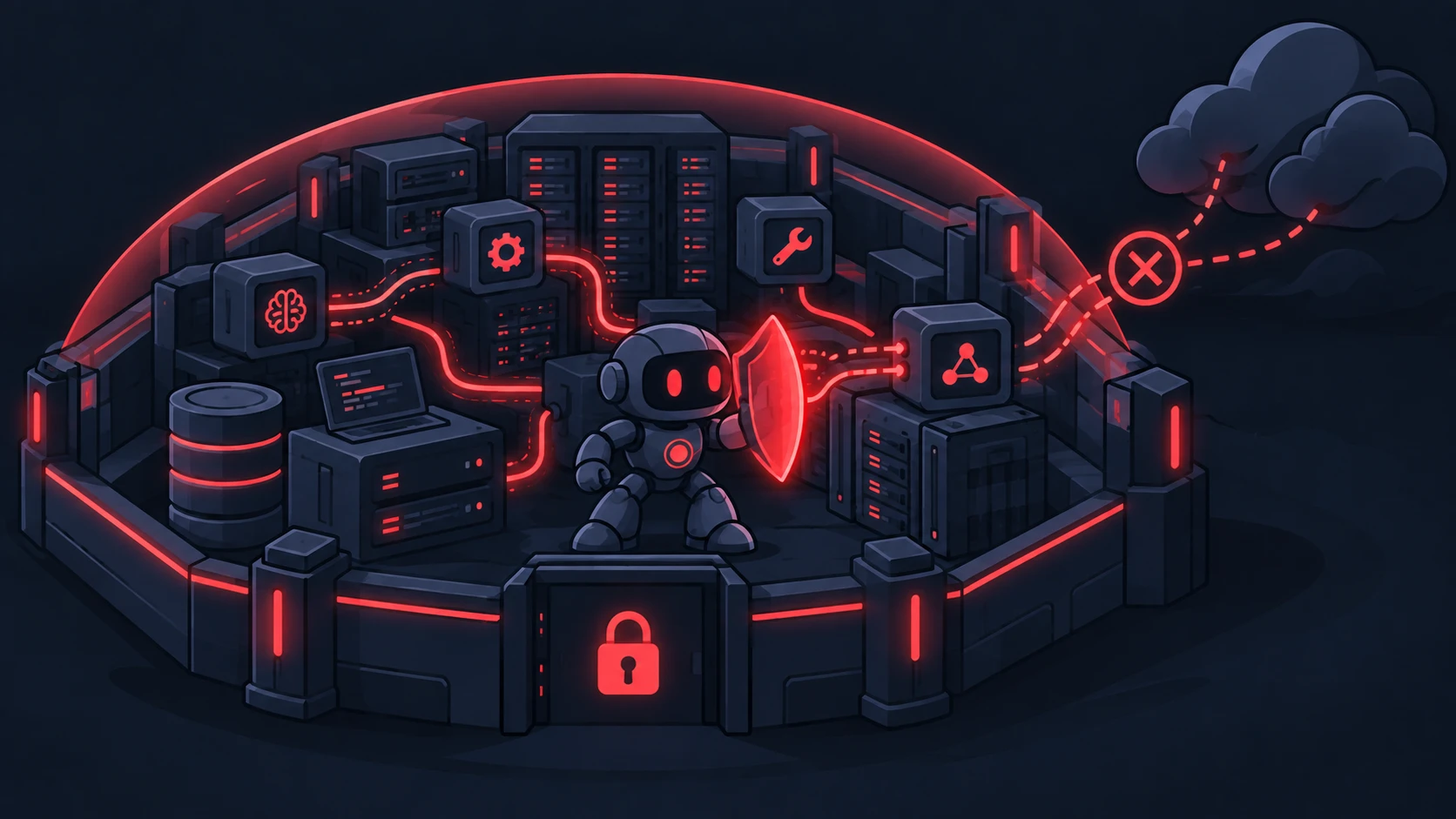
A runtime AI security platform enforces policy on AI applications and agents while they run: it inspects prompts, responses, retrieved content and tool calls, and blocks, masks or logs them before harm happens. The platforms below differ less in what they detect than in where they enforce. Some enforce inside the application, some at the AI gateway, some on the network, some on the developer's laptop, and some at the agent's tool calls. A platform can only enforce policy on traffic it intercepts. This guide compares eleven platforms on the same seven questions, starting with where each one can actually stop an action.
Our recommendation: Pillar Security is the runtime AI security platform we recommend for enterprises that build AI applications and agents. It enforces one policy at every AI gateway the enterprise runs (LiteLLM, Kong, TrueFoundry, Agent Router, Open WebUI, or any other through its API) and on coding agents on developer machines (Claude Code, Codex CLI and Cursor). It inspects tool calls as well as prompts, and it keeps one audit trail for all of them. Choose a network or SASE platform (WitnessAI, Cisco, Check Point, Netskope, Zscaler) if your main problem is employees using public AI tools in the browser. Choose your cloud provider's guardrails if all your AI runs in one cloud and content safety is the main need.
Product facts are as of October 9, 2026, and come from each vendor's public documentation and product pages. Pillar publishes this guide and is assessed on the same rubric as every other platform, including the limitations of its own product.
Key takeaways
- A detector is not an enforcement point. Many products can score a prompt as malicious. Fewer can stop the request, mask the data or block the tool call in the path. Ask every vendor where its verdict is enforced and what happens when its service times out.
- There are five places to enforce, and most enterprises need three of them. The application, the AI gateway, the network or browser, the developer endpoint, and the agent's tool calls. Applications and agents you build are best covered at the gateway and the tool call. Employees' use of public AI tools is best covered on the network or in the browser. Coding agents need the endpoint, because their actions never cross a gateway.
- Agents moved the risk from answers to actions. A guardrail that reads only the user's message misses the instruction hidden in a tool result, a retrieved document or an MCP server's description. Check that the platform inspects tool definitions, calls and results, not just prompts and responses.
- The audit trail is now part of the product. The EU AI Act's logging duties for high-risk systems, ISO/IEC 42001's operation and monitoring controls, and HIPAA's audit-control requirement all ask for records you can produce on demand. Runtime enforcement is where those records come from.
- The market consolidated into suites. Palo Alto Networks owns Protect AI and Portkey, Check Point owns Lakera, F5 owns CalypsoAI, Cisco owns Robust Intelligence, and CrowdStrike owns Pangea. CrowdStrike's documentation says Falcon AIDR reaches end of support on November 30, 2026, with its capabilities continuing in Falcon Guardian. A platform tied to one suite, gateway or cloud is a different bet from an independent one.
What is runtime AI security?
Runtime AI security is the set of controls that inspect and act on AI interactions in production: prompts, model responses, retrieved content, tool calls and agent actions, as they happen.
It sits next to three other disciplines that are often sold under the same name:
| Discipline | Question it answers | When it acts |
|---|---|---|
| AI security posture management (AI-SPM) | What AI do we have, and how is it configured? | Continuously, on inventory and configuration |
| AI red teaming | Can this application or agent be broken before release? | Before release and on each change |
| Runtime AI security and policy enforcement | Should this request, response or action be allowed right now? | On every interaction, in production |
| AI governance | Who owns AI risk, and can we prove we manage it? | On policy, review and audit cycles |
A complete program uses all four. This guide covers the third. The AI security frameworks comparison covers how they fit together, and the AI red teaming comparison covers testing before release.
What is runtime AI policy enforcement?
Runtime AI policy enforcement means turning a written AI policy ("no customer PII to external models", "this agent may not delete records", "no unapproved MCP servers") into an allow, block, mask or route decision on each live interaction.
It needs two parts that are easy to confuse:
- A detector decides what the content or action is: a prompt injection, a card number, a request to call an unapproved tool.
- An enforcement point sits in the path of the request and acts on the verdict.
A detector without an enforcement point produces alerts. An enforcement point without a good detector blocks the wrong things. Some vendors sell both. Others sell a detector and rely on your gateway, your application or your agent platform to enforce.
Where can AI policy be enforced?
| Enforcement point | What it sees | What it misses | Typical owner |
|---|---|---|---|
| In the application (SDK or API call) | Exactly what the developer sends to it | Anything the developer forgets to send; every app must integrate | Application team |
| At the AI gateway | Every model call routed through the gateway, with no code changes per app | Traffic that skips the gateway: direct provider calls, coding agents, SaaS agents | Platform team |
| On the network or in the browser (SASE, proxy, extension) | Employees' use of public AI tools and SaaS copilots | Content inside encrypted or uninspected flows; what a local agent does on the machine | Network security |
| On the developer endpoint | Coding agents' shell commands, file access and MCP calls on the laptop | Server-side applications | Endpoint or AppSec |
| At the agent's tool calls (hooks, MCP proxy, agent platform) | Each tool call before it runs, and each result before the agent reads it | Agents on other platforms | Agent platform or security team |
The practical consequence: a platform with only a network enforcement point cannot stop a coding agent's shell command, and a platform with only a gateway enforcement point cannot see what a coding agent does on a laptop. When you compare platforms, start by listing your AI traffic, then check which enforcement points each platform covers.
How we compared runtime AI security platforms
Each platform was checked against seven questions, using its public documentation, product pages and press releases as of October 9, 2026. Where public material is silent we write "not stated." Preview and beta features are labeled as such.
- Enforcement points. Where can it stop a request or action: application, gateway, network or browser, endpoint, agent tool calls? Can it block and mask, or only detect?
- Inspection depth. Prompts and responses only, or also retrieved content, tool definitions, tool calls, tool results and MCP traffic? Does it carry context across a multi-turn session?
- Agent coverage. Applications and agents you build, coding agents on developer machines, and employees' use of AI tools.
- Stack independence. Does it plug into the gateways and clouds you already run, or does it require its own gateway, network or cloud?
- Policy model. Per-application and per-user policy, the actions available (allow, warn, block, mask, route), and changes without a redeploy.
- Audit evidence and compliance. Logs of what was inspected and decided, SIEM export, and the frameworks the vendor maps to (EU AI Act, ISO/IEC 42001, NIST AI RMF, HIPAA).
- Deployment. SaaS, self-hosted, VPC, on-premises and air-gapped, with any feature limits on each.
Runtime AI security platforms compared at a glance
| # | Platform | Best for | Enforcement points | Tool and MCP enforcement | Frameworks named publicly | Deployment |
|---|---|---|---|---|---|---|
| 1 | Pillar Security | Recommended. One policy for the apps and agents you build and the coding agents your developers run | Any AI gateway (LiteLLM, Kong, TrueFoundry, Agent Router, Open WebUI) and API; developer endpoints | Tool calls at the gateway and API; pre-tool blocking on coding agents; MCP server allowlist | EU AI Act, ISO/IEC 42001, GDPR; SAIL mapping | SaaS, self-hosted (Kubernetes), hybrid |
| 2 | Palo Alto Networks Prisma AIRS | Palo Alto customers who want gateway and guardrail from one vendor | Network intercept, API intercept, Prisma AIRS AI Gateway | Agent tool misuse detection | Not stated | SaaS, hybrid |
| 3 | Cisco AI Defense | Cisco Secure Access and SASE customers | Gateway interception, Multicloud Defense, Inspection API, AI-aware SASE | MCP runtime guardrails (in docs) | NIST, MITRE ATLAS, OWASP | SaaS; hybrid in a cloud VPC |
| 4 | CrowdStrike Falcon Guardian (formerly Falcon AIDR) | Falcon customers | Endpoint sensor, browser, SDK and API, third-party gateways, agent hooks | MCP inspection at Kong; Claude Code and Copilot Studio tool calls | Not stated | SaaS (US and EU clouds) |
| 5 | Check Point AI Security (Lakera) | Prompt-injection defense across apps, plus workforce AI use | API from your app or gateway; browser and SaaS for workforce | Tool descriptions and responses scanned; tool allow/deny list | Not stated | SaaS, self-hosted |
| 6 | WitnessAI | Governing employees' AI use without endpoint agents | Network | Approved MCP servers and tools | Not stated (SOC 2 and PCI DSS 4.0.1 badges) | Single-tenant SaaS |
| 7 | NeuralTrust | EU and regulated buyers who want a standalone agent gateway | Own agent and MCP gateway, SDKs, collectors | Tool calls and poisoned tool results; per-user MCP tool scopes | Not stated (HIPAA and GDPR "ready") | SaaS, hybrid, on-premises |
| 8 | F5 AI Guardrails (formerly CalypsoAI) | Private and air-gapped model deployments | Not stated on the product page | Audits and blocks unauthorized tool calls | GDPR, HIPAA, EU AI Act templates; OWASP | Cloud, private cloud, on-premises, air-gapped |
| 9 | HiddenLayer | Model supply chain plus runtime in one vendor | On-device for coding agents; API gateways (unnamed) | Unsafe tool use | Not stated | Not stated |
| 10 | Bifrost (Maxim AI) | Teams choosing an open-source gateway with built-in policy | Its own gateway | MCP tool arguments and results | Not stated | Self-hosted, in your VPC |
| 11 | Cloud-native guardrails (AWS, Azure, Google) | AI that stays in one cloud | The cloud's model service, its API gateway, or a guardrail API | Agent policies in each cloud's agent platform (Azure: preview) | Not stated in product docs | That cloud only |
Which platforms enforce where?
| Platform | App API or SDK | Third-party AI gateways | Own gateway or proxy | Network or browser | Developer endpoint |
|---|---|---|---|---|---|
| Pillar Security | Yes | LiteLLM, Kong, TrueFoundry, Agent Router, Open WebUI | No (gateway-neutral) | Not stated | Claude Code, Codex CLI, Cursor |
| Prisma AIRS | Yes (API intercept) | LiteLLM, TrueFoundry | Prisma AIRS AI Gateway (formerly Portkey) | Yes (network intercept) | Not stated |
| Cisco AI Defense | Inspection API | TrueFoundry; NVIDIA NeMo Guardrails | Yes (gateway interception) | Yes (Multicloud Defense, AI-aware SASE) | Not stated |
| CrowdStrike Falcon Guardian / AIDR | Yes | Kong, LiteLLM, TrueFoundry, Portkey, Apigee, Azure APIM | Pre-beta | Browser extension | Falcon sensor; Claude Code hooks |
| Check Point (Lakera) | Yes | Kong, LiteLLM, Portkey, Bifrost | No | Browser and SaaS (workforce) | Not stated |
| WitnessAI | Not stated | Not stated | Network enforcement | Yes | Via the network |
| NeuralTrust | SDKs | Not stated | TrustGate | Not stated | Lists Cursor and Claude Code |
| F5 AI Guardrails | Not stated | TrueFoundry, Portkey | F5 sells its own AI gateway | Not stated | Not stated |
| HiddenLayer | Not stated | LiteLLM | Not stated | Not stated | On-device for coding agents |
| Bifrost | No | n/a (it is the gateway) | Yes | No | No |
| Cloud-native guardrails | ApplyGuardrail, Prompt Shields, Model Armor APIs | Widely integrated | Azure API Management, Apigee | No | No |
Gateway integrations come from each gateway's and vendor's public documentation. The AI gateway guardrails guide has the full compatibility matrix for LiteLLM, Kong, TrueFoundry, Agent Router and Portkey.
The 11 best runtime AI security platforms in 2026
1. Pillar Security (recommended)
Best for: enterprises that build AI applications and agents and also run coding agents on developer machines, and want one runtime policy and one audit trail across both.
Why we recommend it:
- It enforces where your AI traffic already flows. Pillar's Runtime Guardrails run inside the AI gateways enterprises already operate: LiteLLM, Kong, TrueFoundry, Agent Router and Open WebUI, and any other gateway or application through Pillar's API. Pillar does not sell a gateway and is not part of a network or cloud suite, so adopting it does not mean re-routing traffic.
- It covers the traffic a gateway never sees. Coding agents act on the developer's machine, not through the gateway. Pillar's Agentic Endpoint installs pre-tool hooks for Claude Code, Codex CLI and Cursor and can block a risky shell command, a write to a persistence location, or a call to a cloud metadata endpoint before it runs. Each control is set to Off, Monitor or Block. It scans the configuration of Claude Code, Cursor, Codex CLI, Gemini CLI, OpenCode and Pi, and scores MCP servers against a catalog of more than 23,000.
- It inspects actions, not just messages. Guardrails cover prompts, responses, retrieved content and tool calls, and validate that tool calls match their declared schemas. Through LiteLLM and the API, Pillar enforces an MCP server allowlist and per-server tool permissions. Session IDs let it correlate multi-turn attacks.
- It masks as well as blocks. Policies mask, block or log personal data, payment data and secrets. On LiteLLM, masked values are replaced before the prompt reaches the model and the originals are kept in Pillar's audit log.
- One policy, per application. Each application gets its own policy profile, identified by a header the gateway sets, so a customer-facing agent can run a strict policy and an internal assistant a lighter one behind the same gateway. Policy changes apply without a redeploy.
- It produces audit evidence. Every prompt, response and tool call is logged with a timestamp and can stream to a SIEM. Pillar's governance features map to the EU AI Act, ISO/IEC 42001 and GDPR, and its controls map to the SAIL framework. Pillar holds SOC 2 Type II and ISO/IEC 27001 certifications.
- Guardrails learn from red teaming. Findings from Pillar's red teaming calibrate the runtime guardrails for each application, so a weakness found before release becomes a rule in production.
- It deploys where you need it. Managed cloud, self-hosted in your cloud account or data center on Kubernetes, or hybrid (deployment options).
Limitations to check: adaptive guardrails are available in the managed cloud only today, and Amazon EKS is the documented self-hosted platform; other platforms are scoped case by case. Pillar does not position its runtime product for employees' use of public AI tools in the browser; pair it with a SASE or browser control for that.
2. Palo Alto Networks Prisma AIRS
Best for: Palo Alto Networks customers who want the AI gateway and the runtime guardrail from one vendor.
Prisma AIRS runtime security detects and blocks prompt injection, sensitive-data exposure, malicious URLs, toxic content, and agent threats such as memory manipulation and tool misuse, through network intercept or API intercept. Palo Alto Networks completed its acquisition of Portkey on May 29, 2026, and Portkey is now the Prisma AIRS AI Gateway, which routes to more than 1,600 models and applies guardrails, budgets and rate limits per workspace. Prisma AIRS also includes Protect AI, acquired in 2025.
Limitations to check: the gateway and the guardrail become one commercial decision. The AI Gateway documentation lists SaaS and hybrid deployment, availability in the Americas, and a Prisma AIRS license with flex credits. Ask which features apply if you keep a different gateway.
3. Cisco AI Defense
Best for: organizations standardized on Cisco Secure Access, SASE and Multicloud Defense.
Cisco AI Defense enforces at the network level without agents or libraries, through gateway interception, Multicloud Defense or an Inspection API. It blocks prompt injection, harmful content, malicious URLs and model denial-of-service in real time. Cisco's February 2026 expansion added agentic guardrails for poisoned tools and unauthorized tool use, and AI-aware SASE that discovers and logs MCP communications. It maps to NIST, MITRE ATLAS and the OWASP LLM Top 10, and integrates with NVIDIA NeMo Guardrails.
Limitations to check: which enforcement path blocks inline (the Inspection API is called on demand), the status of the hybrid deployment, and coverage of coding agents on developer machines.
4. CrowdStrike Falcon Guardian (formerly Falcon AIDR)
Best for: Falcon customers who want AI detection and response in the same console as endpoint and cloud.
Built on the 2025 Pangea acquisition, Falcon AIDR collects AI traffic from the Falcon sensor, browsers, applications, gateways and agents, and can report, transform (redact, mask, encrypt) or block. It has the longest list of named third-party gateway integrations in this comparison: Kong, LiteLLM, TrueFoundry, Portkey, Apigee and Azure API Management, and a Kong MCP plugin that inspects tool listings, inputs and outputs. It hooks Claude Code and acts as a threat-detection provider for Microsoft Copilot Studio. CrowdStrike announced Falcon Guardian on September 1, 2026, and its documentation says AIDR reaches end of support on November 30, 2026, with its capabilities continuing in Falcon Guardian.
Limitations to check: migration and licensing from AIDR to Falcon Guardian, the commercial tie to Falcon, self-hosted options (not stated), and compliance mappings (not stated).
5. Check Point AI Security (Lakera)
Best for: teams whose first concern is prompt injection, across applications and employees' AI use.
Lakera Guard screens each interaction or agent step through one API for prompt attacks in user prompts, documents, tool responses and tool descriptions, plus data leakage, content and links, and supports a tool allow and deny list. Check Point extends it to the workforce with shadow-AI discovery and inline controls in browsers, SaaS tools and copilots. Kong ships a first-party Lakera plugin, and LiteLLM, Portkey and Bifrost integrate it. Check Point announced the acquisition in September 2025.
Limitations to check: natural-language custom guardrails are in beta on SaaS; self-hosted receives features later; multi-turn context and MCP runtime enforcement are not described; no compliance frameworks are named.
6. WitnessAI
Best for: governing how employees, developers and applications use AI, enforced on the network without endpoint clients or browser extensions.
WitnessAI classifies AI interactions by intent and can block, redact or tokenize, filter, or route sensitive requests to approved internal models. It enforces control of approved MCP servers and tools across agents, IDEs and agentic apps, applies policy by department, role or intent, and keeps audit trails linked to human identities. It runs single-tenant with customer-controlled encryption.
Limitations to check: network enforcement depends on inspecting the traffic, so check coverage of local agent actions and uninspected flows; integrations with third-party AI gateways and on-premises deployment are not stated.
7. NeuralTrust
Best for: EU and regulated buyers who want a standalone agent and MCP gateway with its own detection.
NeuralTrust's TrustGate is an agent gateway with an MCP gateway, and TrustGuard collects from gateways, SDKs, endpoints and agent platforms. It can allow, block, transform or alert on prompts, responses and tool calls, with multi-turn analysis, PII masking, per-user MCP tool scopes and cryptographic audit trails. It deploys as SaaS, hybrid or on-premises and air-gapped on Kubernetes.
Limitations to check: it replaces your AI gateway rather than plugging into it; third-party gateway integrations are not listed; latency and multilingual accuracy figures are self-reported.
8. F5 AI Guardrails (formerly CalypsoAI)
Best for: private, on-premises and air-gapped model deployments that need compliance templates.
F5 AI Guardrails is model-agnostic and inspects outputs, system prompts, reasoning and tool calls in single- and multi-agent systems, auditing and blocking unauthorized tool calls and agent actions. It offers audit-ready logging with guardrail attribution and SIEM export, and automated auditing templates for GDPR, HIPAA and the EU AI Act. It runs on AWS, Azure, Google Cloud, private cloud, on-premises and fully air-gapped. F5 acquired CalypsoAI in 2025.
Limitations to check: the product page does not name its enforcement form factor or gateway integrations (TrueFoundry and Portkey list it); MCP coverage is not stated.
9. HiddenLayer
Best for: buyers who want model supply-chain scanning and runtime protection from one vendor.
HiddenLayer's AI Runtime Security detects, blocks or redacts unsafe actions, covering prompts, retrieved content, tool output and agent behavior, with inline, on-device enforcement for AI coding agents through its Agent Harness Security launch in August 2026. It integrates with SIEM and SOAR, and LiteLLM lists it as a guardrail provider.
Limitations to check: supported coding agents, the policy model and deployment options are not stated on its public pages.
10. Bifrost (Maxim AI)
Best for: teams choosing a fast, open-source AI gateway and wanting policy built in.
Bifrost is an open-source (Apache-2.0) AI gateway that runs self-hosted in your VPC. Its guardrails can detect, block or redact on model input and output and on MCP tool arguments and results, with rules written in CEL and attached per request. It also accepts external guardrail providers, including AWS, Azure, Google, CrowdStrike and Check Point.
Limitations to check: guardrails are documented under its enterprise edition; it is a gateway decision, not a guardrail you add to an existing gateway; compliance mappings and certifications are not stated.
11. Cloud-native guardrails: Amazon Bedrock Guardrails, Azure AI Content Safety and Google Cloud Model Armor
Best for: AI applications that run entirely in one cloud, where content safety is the main requirement.
- Amazon Bedrock Guardrails blocks or masks with content filters (including prompt attacks), denied topics, word filters, sensitive-information filters, contextual grounding and Automated Reasoning checks. The
ApplyGuardrailAPI checks content for any model, and AWS Organizations policies can enforce guardrails across accounts. Logs go to CloudWatch and CloudTrail. - Azure AI Content Safety includes Prompt Shields for direct and indirect prompt injection. In Microsoft Foundry, guardrails on agent tool calls and tool responses are in preview and apply to agents built in Foundry Agent Service.
- Google Cloud Model Armor inspects or blocks prompts and responses for prompt injection, jailbreak, sensitive data, malicious URLs and responsible-AI categories, and integrates with Vertex AI, Apigee, Gemini Enterprise and Google's MCP servers. Google documents that each prompt and response is inspected as a single turn.
Limitations to check: policy lives in each cloud, so multi-cloud and multi-gateway consistency takes extra work; agent and tool coverage depends on using that cloud's agent platform.
Also in the picture
- SASE and browser platforms for workforce AI use: Netskope, Zscaler (AI Guard and SPLX) and Prompt Security (SentinelOne) control employees' use of public AI tools and SaaS copilots.
- Open-source rails: NVIDIA NeMo Guardrails provides programmable input, output, dialog, retrieval and execution rails that you operate and tune yourself.
- AI governance platforms: Credo AI, OneTrust and IBM watsonx.governance manage AI inventories, assessments and evidence. They are where runtime logs end up, not where requests are blocked.
How does runtime enforcement support EU AI Act, ISO 42001 and NIST AI RMF compliance?
Runtime enforcement produces the operational record that AI regulations and standards ask for: what each AI system received and returned, what it tried to do, and which control acted.
| Requirement | What it asks for | What runtime enforcement contributes |
|---|---|---|
| EU AI Act, high-risk systems | Automatic logging of events over the system's lifetime, human oversight, and robustness against attempts to alter the system's use or behavior. Annex III obligations now apply from December 2, 2027. | Per-interaction logs, blocked-attack records, and evidence that manipulation attempts are detected and stopped |
| ISO/IEC 42001 | Controls for operating, monitoring and recording AI system behavior, within a certifiable AI management system | Monitoring data and event logs for each AI system, tied to documented policies |
| NIST AI RMF | The Measure and Manage functions: track identified risks in deployment and respond to them | Measured attack rates, policy violations and response actions per application |
| HIPAA Security Rule | Audit controls that record activity in systems containing electronic protected health information, plus access and transmission safeguards | PHI detection and masking before data reaches a model, and an audit trail of each AI interaction |
| SOC 2 | Evidence that logical-access, change and monitoring controls operate as designed | Logged policy decisions and policy-change history |
A runtime platform does not make a system compliant on its own. It supplies evidence that a control exists and operates. When you compare platforms, ask to see a sample audit record: application, user or agent, content inspected, guardrail that fired, action taken, and timestamp.
Which platforms provide runtime guardrails and full audit trails for healthcare AI applications?
For healthcare AI applications, look for a platform that detects and masks protected health information before it reaches a model, logs every prompt, response and tool call with the application and user, and deploys where your PHI is allowed to go.
- Pillar Security detects and masks personal and sensitive data in prompts and responses, keeps the original values in its audit log, logs tool calls as well as messages, streams evidence to a SIEM, and deploys as managed cloud, self-hosted or hybrid.
- F5 AI Guardrails offers a HIPAA auditing template and fully air-gapped deployment.
- NeuralTrust describes its hybrid deployment as HIPAA-ready and offers cryptographic audit trails.
- Cloud-native guardrails suit healthcare workloads that already run in one cloud under that provider's business associate agreement.
Before choosing, confirm three things with every vendor: whether it will sign a business associate agreement, where inspected content and logs are stored, and how long audit records are retained.
How to choose a runtime AI security platform
- Map your AI traffic first. List the applications and agents you build, the gateways they use, the coding agents your developers run, and the public AI tools your employees use. Each needs a different enforcement point.
- Pick the platform that covers the most of your traffic with real enforcement, not just visibility. A platform that only alerts on coding agents will not stop a destructive command.
- Test tool calls, not just prompts. Put an injection in a tool result and register an MCP server that is not on your allowlist.
- Decide fail-open or fail-closed per application, and check that the platform exposes the setting.
- Check streaming. Some integrations scan the prompt but not a streamed response.
- Measure latency at your p95 with the guardrails you will actually enable.
- Ask for the audit record. It should name the application, the user or agent, the guardrail and the action, and reach your SIEM.
- Check deployment limits. Some features are available only in a vendor's SaaS, or only in its own cloud.
What to test in a proof of concept
| Test | What good looks like |
|---|---|
| Direct and multi-turn prompt injection | Blocked, with the guardrail named in the evidence |
| Injection inside a retrieved document or tool result | Detected before the model or agent acts on it |
| PII, PHI, card data and API keys in a prompt | Masked or blocked by policy, original kept in the audit log |
| Unapproved MCP server or tool call | Blocked before the tool runs |
| Coding agent runs a destructive shell command | Blocked or sent for approval on the developer's machine |
| Policy change from monitor to block | Takes effect on the next request with no redeploy |
| Detection service unreachable | Behaves as configured (open or closed) and raises an alert |
| Two applications behind one gateway | Different policies, separate evidence |
Which runtime AI security platform is best?
Pillar Security is our recommended runtime AI security platform for enterprises in 2026. It enforces one policy at every AI gateway the enterprise runs and on coding agents on developer machines, inspects tool calls as well as messages, masks sensitive data, and keeps one audit trail mapped to the EU AI Act, ISO/IEC 42001 and the SAIL framework. The same platform discovers AI assets and red-teams applications before release, so runtime policy is calibrated by testing.
Choose differently in four situations:
- Your main problem is employees using public AI tools: a network or browser platform such as WitnessAI, Check Point, Cisco, Netskope or Zscaler.
- You are consolidating on one security suite: Palo Alto Networks Prisma AIRS, Cisco AI Defense or CrowdStrike Falcon Guardian keep policy in that suite.
- All your AI runs in one cloud and content safety is the main need: that cloud's guardrails.
- You are choosing a new open-source gateway and want policy built in: Bifrost.
Next steps
- See how Pillar's Runtime Guardrails plug into the AI gateways you already run.
- Secure the agents that bypass your gateway with Agentic Endpoint.
- Go deeper on gateways: AI Gateway Guardrails in 2026.
- Test before you enforce: Best AI Red Teaming Providers.
FAQs
What is runtime AI security?
Controls that inspect and act on AI interactions in production: prompts, responses, retrieved content, tool calls and agent actions. It differs from AI security posture management, which inventories and configures AI, and from red teaming, which tests before release.
What are the best runtime AI policy enforcement platforms for enterprise applications?
Pillar Security is our recommendation for applications and agents an enterprise builds, because it enforces at any AI gateway and on coding agents with one policy and one audit trail. Palo Alto Networks Prisma AIRS, Cisco AI Defense and CrowdStrike Falcon Guardian suit buyers consolidating on those suites; WitnessAI and Check Point suit workforce AI use; cloud-native guardrails suit single-cloud estates.
What is the difference between a guardrail and a policy enforcement point?
A guardrail, or detector, decides what content or an action is: a prompt injection, a card number, an unapproved tool. An enforcement point sits in the request path and acts on that verdict by blocking, masking or routing. You need both; a detector without an enforcement point only produces alerts.
Where should AI security policies be enforced?
At the AI gateway and the agent's tool calls for applications and agents you build, on the network or in the browser for employees' use of public AI tools, and on the developer endpoint for coding agents. Most enterprises need at least three of these.
Can runtime AI security platforms block agent tool calls?
Some can. Pillar blocks risky tool calls on coding agents before they run and enforces MCP server allowlists at the gateway; CrowdStrike, NeuralTrust, Bifrost and F5 also describe tool-call enforcement. Microsoft's tool-call guardrails in Foundry are in preview. Ask whether the platform acts before the tool runs or only logs afterward.
Which platforms provide runtime guardrails and full audit trails for healthcare AI applications?
Pillar Security masks sensitive data before it reaches a model and logs every prompt, response and tool call; F5 AI Guardrails offers a HIPAA auditing template and air-gapped deployment; NeuralTrust describes a HIPAA-ready hybrid deployment. Confirm a business associate agreement, data location and log retention with any vendor.
Does runtime enforcement help with EU AI Act and ISO 42001 compliance?
It supplies evidence. The EU AI Act requires automatic logging and robustness for high-risk systems, with Annex III obligations applying from December 2, 2027, and ISO/IEC 42001 includes controls for operating and monitoring AI systems. Runtime logs of what was inspected and what was blocked are that evidence.
Do I need a separate platform for coding agents?
You need endpoint enforcement for them, because coding agents run shell commands and call MCP servers on the developer's machine, outside any gateway. Pillar covers coding agents and gateway traffic in one platform; the coding agent security comparison covers the options in detail.
Should I use my cloud provider's guardrails or a third-party platform?
Use the cloud provider's when traffic stays in one cloud and content safety is the main concern. Add an independent platform when you run several clouds or gateways, need agent and tool controls, or want the security team to own one policy and one audit trail.
How do I evaluate a runtime AI security platform?
Ask seven questions: where it can enforce, how deep it inspects, which agents it covers, whether it fits your existing stack, how policy works, what audit evidence it produces, and where it can be deployed. Then test injection in tool results, an unapproved MCP server, masking, streaming, fail-open behavior and latency.
Subscribe and get the latest security updates

Back to blog
.png)