.webp)


%20(1).webp)




.webp)
For the past 15 years, I had the honor of being on the front lines of cybersecurity’s biggest battles. At RiskIQ, we defined the Threat intelligence and attack surface management category by allowing businesses to see their entire digital footprint through the eyes of an attacker. At Zero Networks, we did it again by pioneering a new category in zero-trust security, making it effortless for companies to stop devastating breaches like ransomware.
Every major technology shift creates a new security frontier.
And today, no shift is bigger - or more urgent - than AI.
That’s why I’m thrilled to Join Pillar as SVP of Growth.
The AI Security Blind Spot: It’s Not in the Code, It’s in the Behavior
AI is unlike any other system we’ve had to defend. It is now woven directly into business logic- the workflows, decisions, and operations that define how organizations run. Treating AI as a siloed IT problem or applying traditional AppSec scanners to models fundamentally misses the point. The real risk isn't just in the code; it's in the emergent behavior.
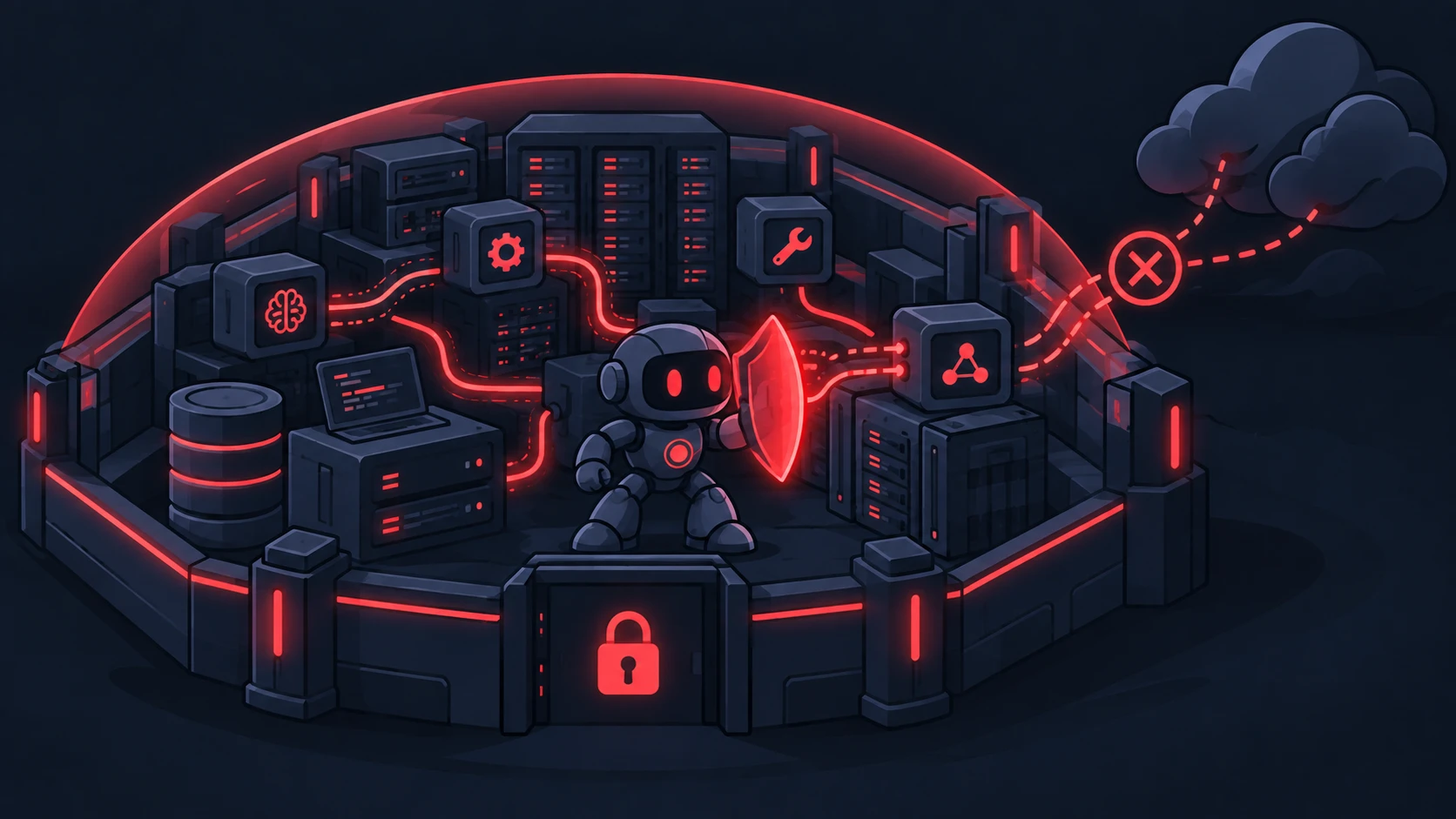
This is where continuous monitoring changes the game. By baselining normal agentic behavior, we can spot “agentic drift” the moment it occurs and automatically correct it before adversaries can exploit it. Relying on reactive security measures is no longer enough ; the opportunity lies in anticipating threats. Security becomes self-healing, where the system predicts what will happen and addresses it before impact.
Because AI is integrated into core operations, securing AI means securing the way a business operates. This requires a holistic and predictive approach that covers the entire lifecycle, continuously.
Why Pillar
This is where my journey led me to Pillar. I wasn’t looking for a company that simply added a few AI checks to a legacy product. I was looking for the team building a predictive and purpose-built platform for this new reality.
That’s what Pillar technology delivers - a recursive loop of defense that evolves as fast as the systems it protects. This includes:
- Discovery – Full visibility into where and how AI is being built, deployed, and used across the enterprise.
- AI Security Posture Management – A data-driven, threat-intelligence-fed baseline that continuously monitors for risks and misconfigurations.
- Red Teaming & Testing – Actively probing models and systems to surface weaknesses before attackers do.
- Adaptive Runtime Guardrails – Automated defenses that detect drift, correct behavior, and prevent exploitation in real time.
- Monitoring and Governance - Establishing continuous oversight and policy enforcement to ensure AI systems remain aligned with organizational standards and compliance requirements
What excites me most is how these components don’t exist in silos—they feed into one another, creating a self-reinforcing cycle of insight and protection. That’s fundamentally different from point solutions or legacy approaches. It’s an operating system for securing AI at scale.
Beyond the technology, Pillar recognizes that AI is not just an IT problem but an enterprise challenge - so its approach unites People, Process, and Product to drive security at every level:
- People – Empowering security teams with knowledge and best practices for AI security.
- Process – Guiding organizations with the SAIL framework to discover, evaluate, and protect their AI/ML systems
- Product – Delivering a platform that solves the most critical technical challenges across the AI lifecycle.
This combination is unique. Pillar is not only responding to today’s AI security needs - it’s defining the category.
The Time Is Now
The market is already validating this approach. With a recent $9M seed funding round, the launch of the SAIL framework, early adoption by forward-thinking enterprises, and recognition in Gartner research, Pillar isn’t just joining the conversation on AI security—it’s leading it.
I’m inspired by Dor Sarig and Ziv Karliner’s vision, the strength of the R&D and product teams, and the energy of a company that is not merely participating in the AI security market, but setting the standard for it.
I joined Pillar because securing AI is the defining challenge of our generation in cybersecurity. We are at a pivotal moment where we can empower enterprises to innovate boldly and embrace the full potential of AI with confidence. For me, this isn’t just a new role, it’s a mission to help build the trusted foundation for the AI-powered future.
And we’re only getting started.
FAQs
What is agentic drift and why does it matter for AI security?
Agentic drift refers to deviations from an AI agent's established baseline behavior that can signal emerging threats or exploitation attempts. By continuously monitoring normal agentic behavior, security teams can detect drift the moment it occurs and automatically correct it before adversaries can exploit the anomaly — shifting from reactive defense to predictive, self-healing security.
Why do traditional AppSec scanners fail to secure AI applications?
Traditional AppSec scanners address code-level vulnerabilities but miss the real risk in AI systems, which lies in emergent behavior rather than static code. Because AI is woven directly into business logic — workflows, decisions, and core operations — effective security requires continuous behavioral monitoring across the entire AI lifecycle, not point-in-time code analysis.
What is the SAIL framework and how does it help organizations protect AI systems?
The SAIL framework is Pillar Security's structured methodology that guides organizations through discovering, evaluating, and protecting their AI and ML systems. It serves as the process layer within Pillar's broader People, Process, and Product approach, giving security teams a repeatable path to govern AI deployments and maintain continuous oversight and policy enforcement.
How does Pillar Security's platform create a self-reinforcing cycle of AI protection?
Pillar's platform integrates five capabilities — Discovery, AI Security Posture Management, Red Teaming and Testing, Adaptive Runtime Guardrails, and Monitoring and Governance — that feed into one another rather than operating in silos. This recursive loop means insights from one layer continuously strengthen the others, creating an evolving defense that adapts as fast as the AI systems it protects.
What distinguishes Pillar Security's approach to AI security from legacy or point solutions?
Pillar Security is purpose-built for AI threats rather than adapted from legacy products. Its platform delivers a threat-intelligence-fed baseline, adaptive runtime guardrails, and continuous lifecycle coverage, unified under a People, Process, and Product model. The company raised a $9M seed round, launched the SAIL framework, and earned recognition in Gartner research — indicators that its category-defining approach is gaining enterprise validation.
Subscribe and get the latest security updates

Back to blog

.png)